01 / Geometry
Make the file work as a part.
Bridges, hooks, joints and orientation were considered alongside the shape the customer needed.

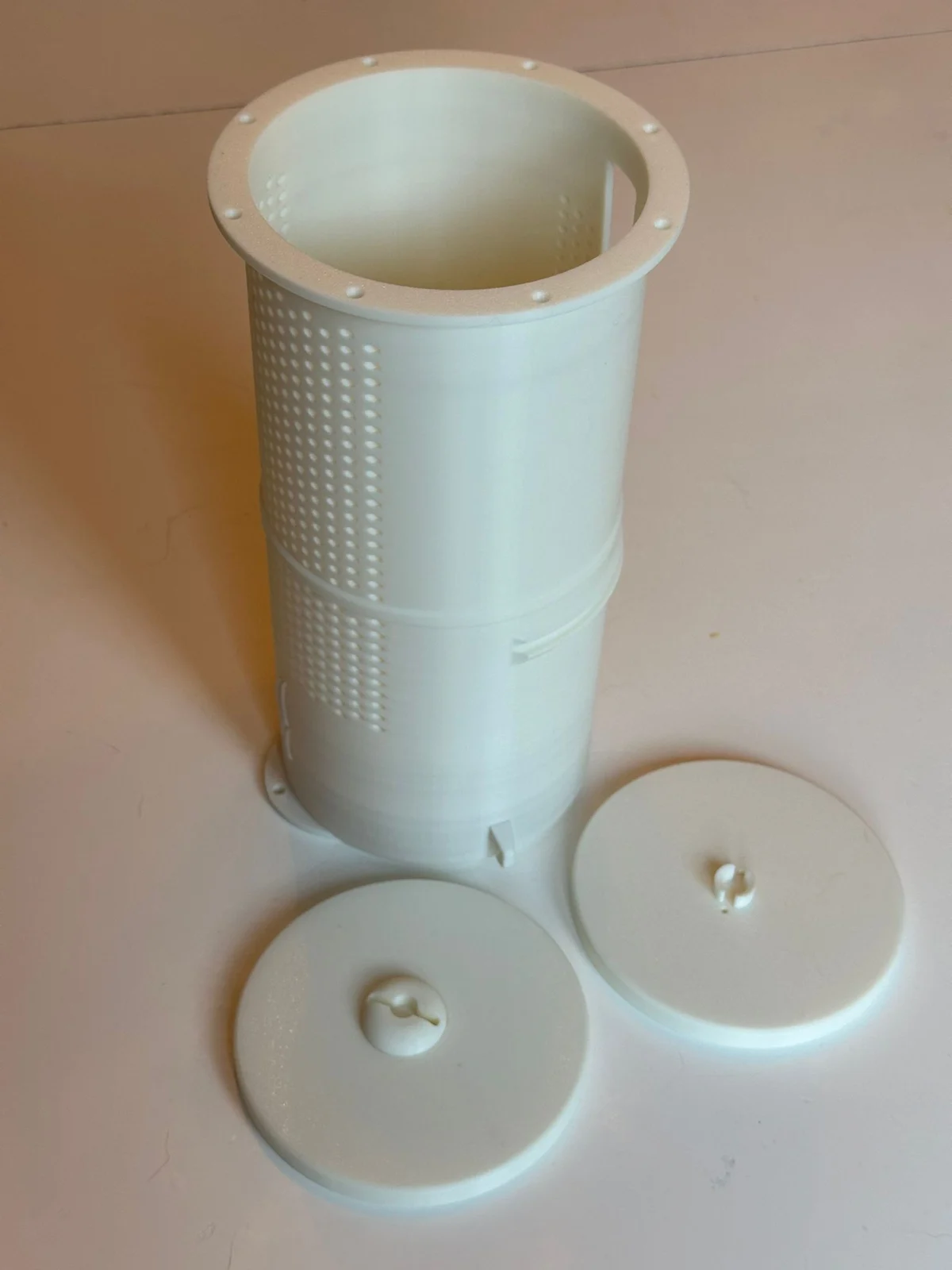
From the first bait-container baskets to floats, mechanisms and equipment housings. We helped Bait Saviour turn successive designs into physical parts they could assemble, handle and test.
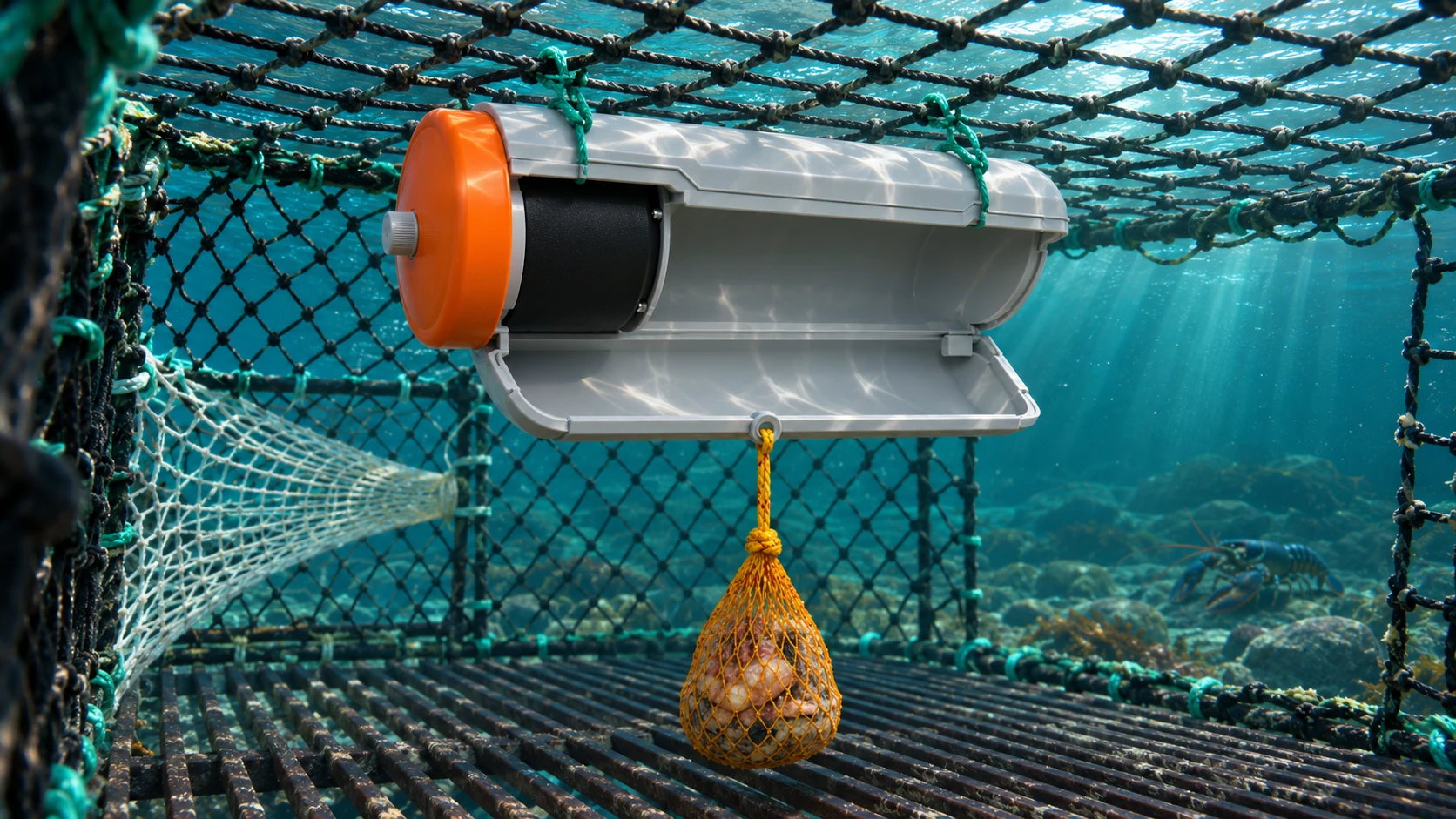
Bait Saviour develops equipment for commercial lobster and crab fishing. Its timed bait container keeps a portion of bait protected before releasing it into the pot after a chosen delay. The wider project also included the WaTS buoy-and-line recovery system and powered banding equipment.
Our involvement ran across more than two years of development. The team supplied CAD and feedback from the next assembly or test. We checked how each revision could be made, suggested print-oriented changes, produced the parts and helped choose materials for the job.
Prototype manufacturing and printability support by Phoenix Additive. Original product design and system development belong to Bait Saviour.
The early baskets had long openings, overhangs and small hooks. Printing a model was only part of the job: the geometry had to suit the process without changing the features the team needed to test.
We added columns to shorten bridges, discussed chamfers and tapers to reduce unsupported edges, and worked through split-and-join arrangements when a basket was too large for the enclosed printer needed for a particular material.
As the hooks and openings evolved, material choice evolved too. We produced PETG-CF baskets and comparison samples in ASA and carbon-fibre reinforced nylon. Later conversations weighed stiffness against brittleness, colour and the need to print the basket in one piece.
In July 2024, the team specifically wanted printed units for sea trials before committing to a production tool. That is where a prototype earns its place: a change can be tried before it becomes expensive to change.
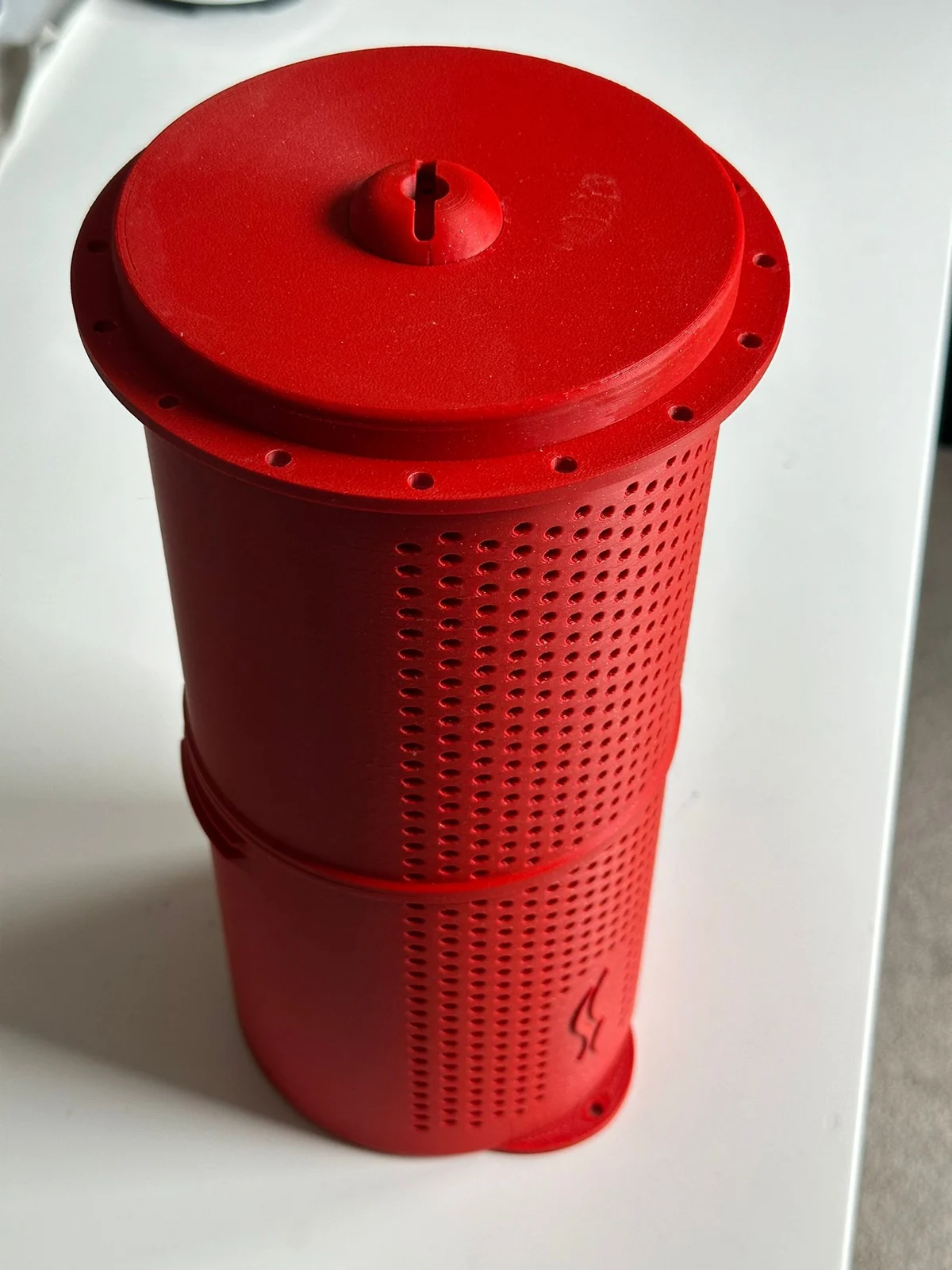
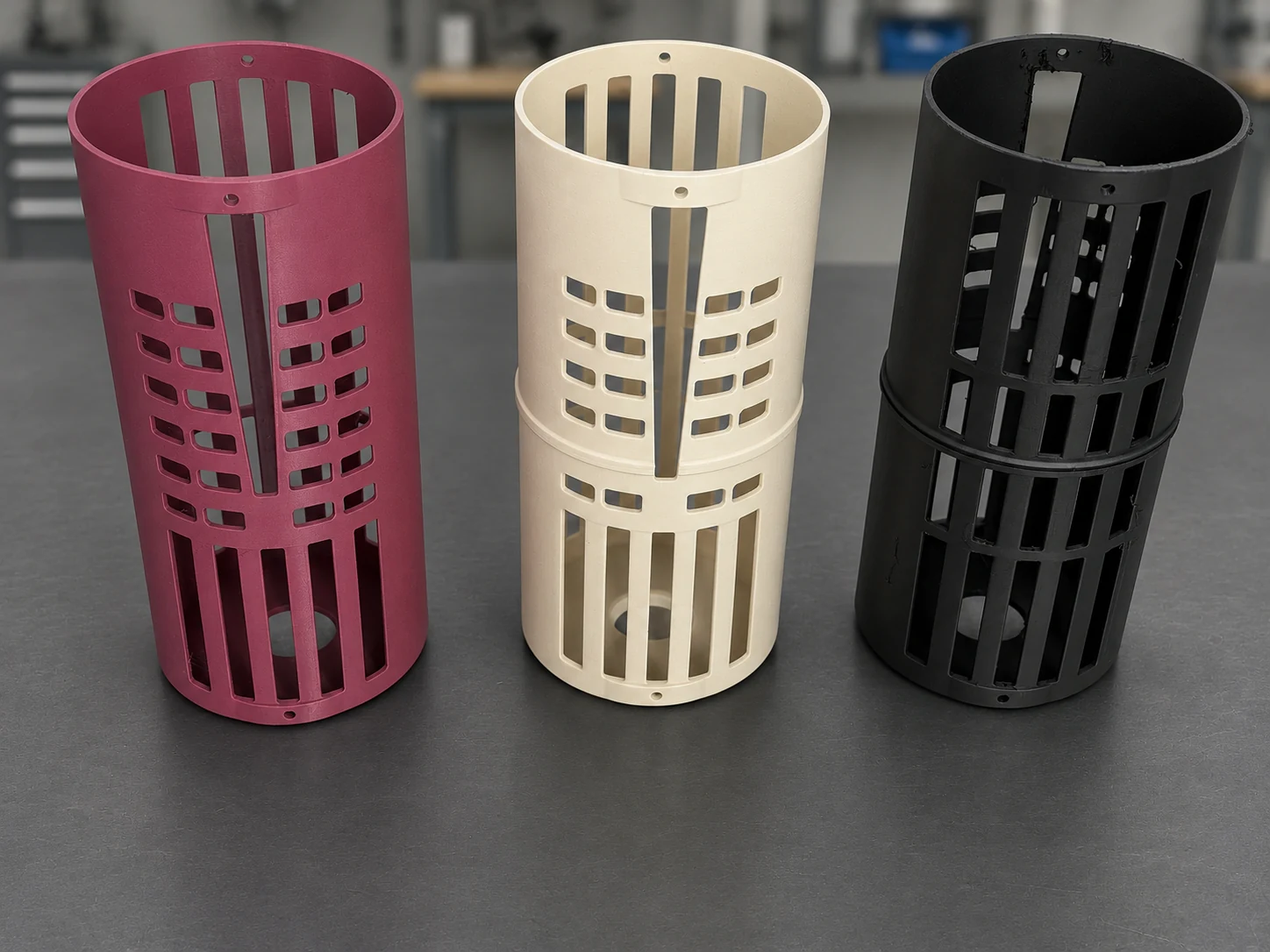
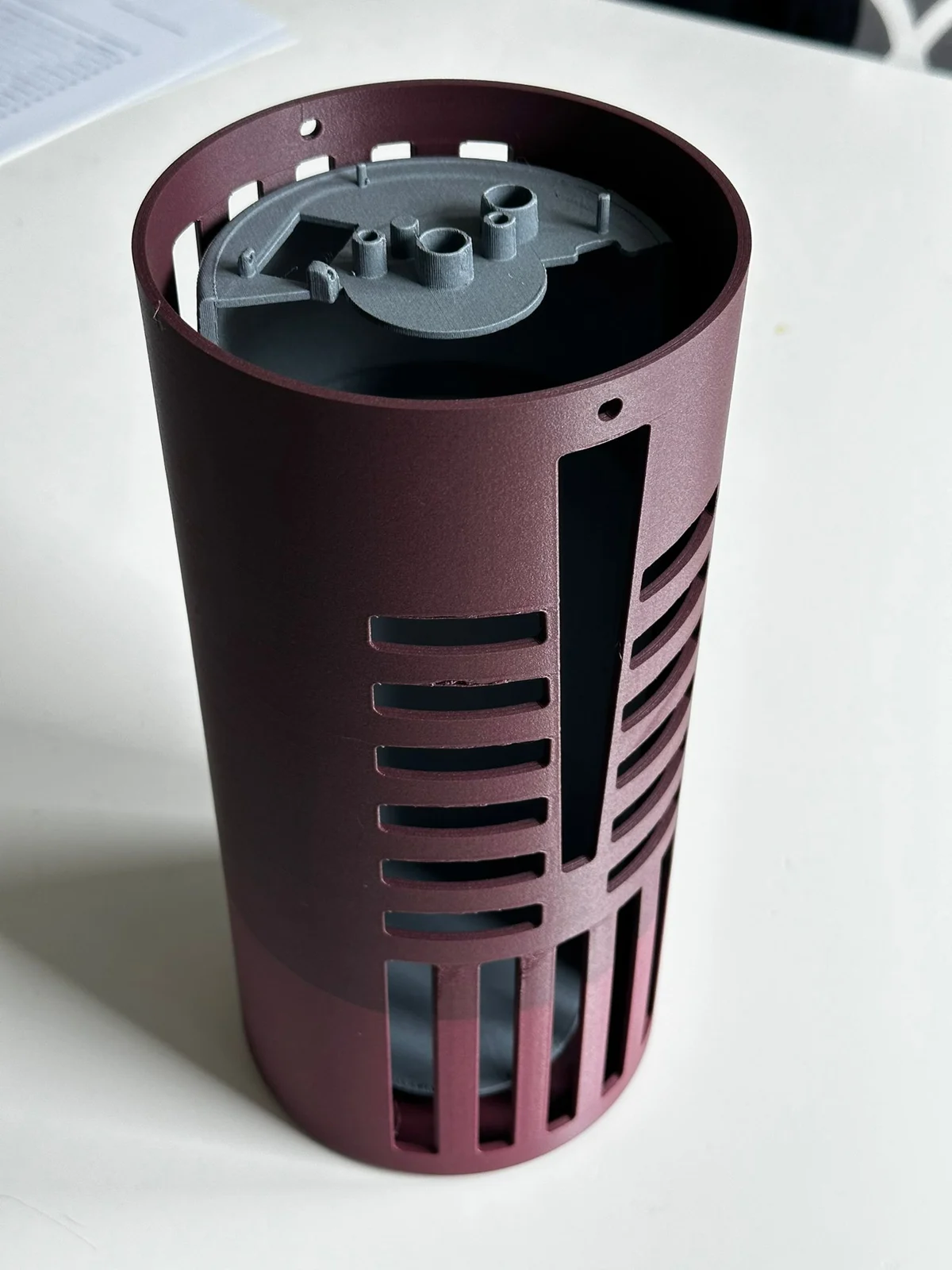
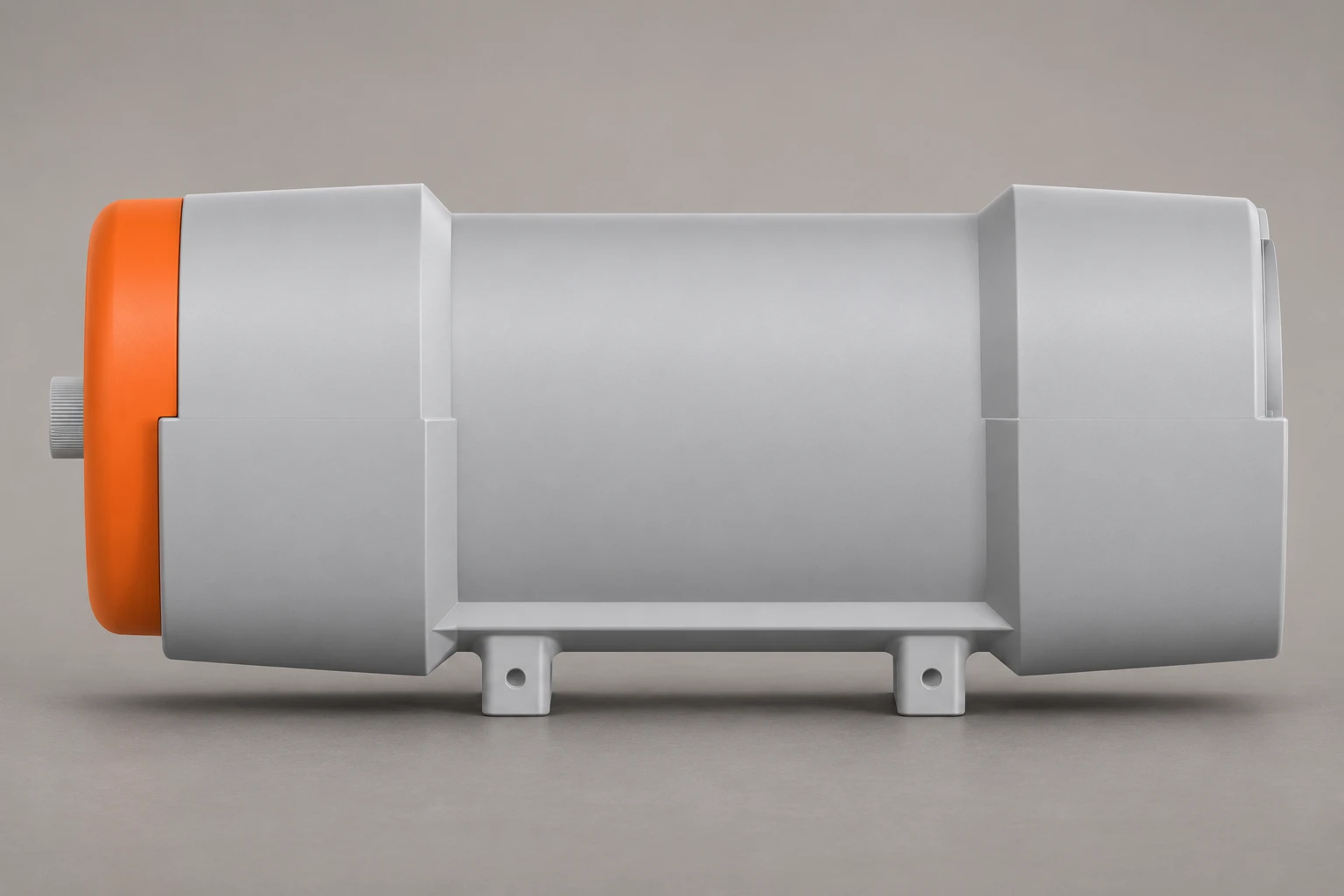
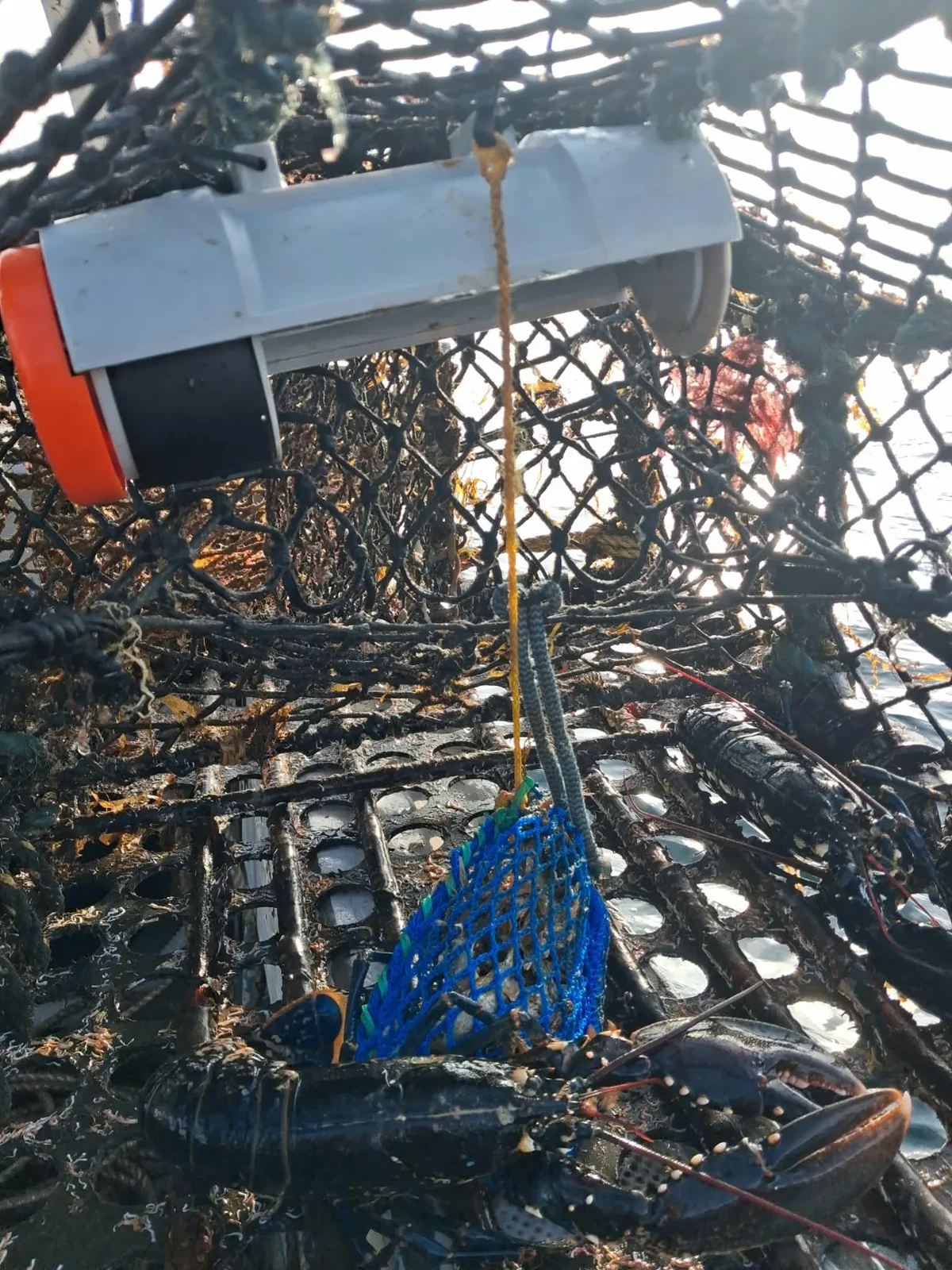
Bait Saviour’s current container protects bait early in the soak, then opens after a preset delay. The studio illustration below is based on Bait Saviour’s product image. Their field photograph shows the container inside a working creel.
The WaTS work brought another set of questions: float weight, wall thickness, foam filling, spindle strength and how the assembly would go together. One material and one print orientation would not answer all of them.
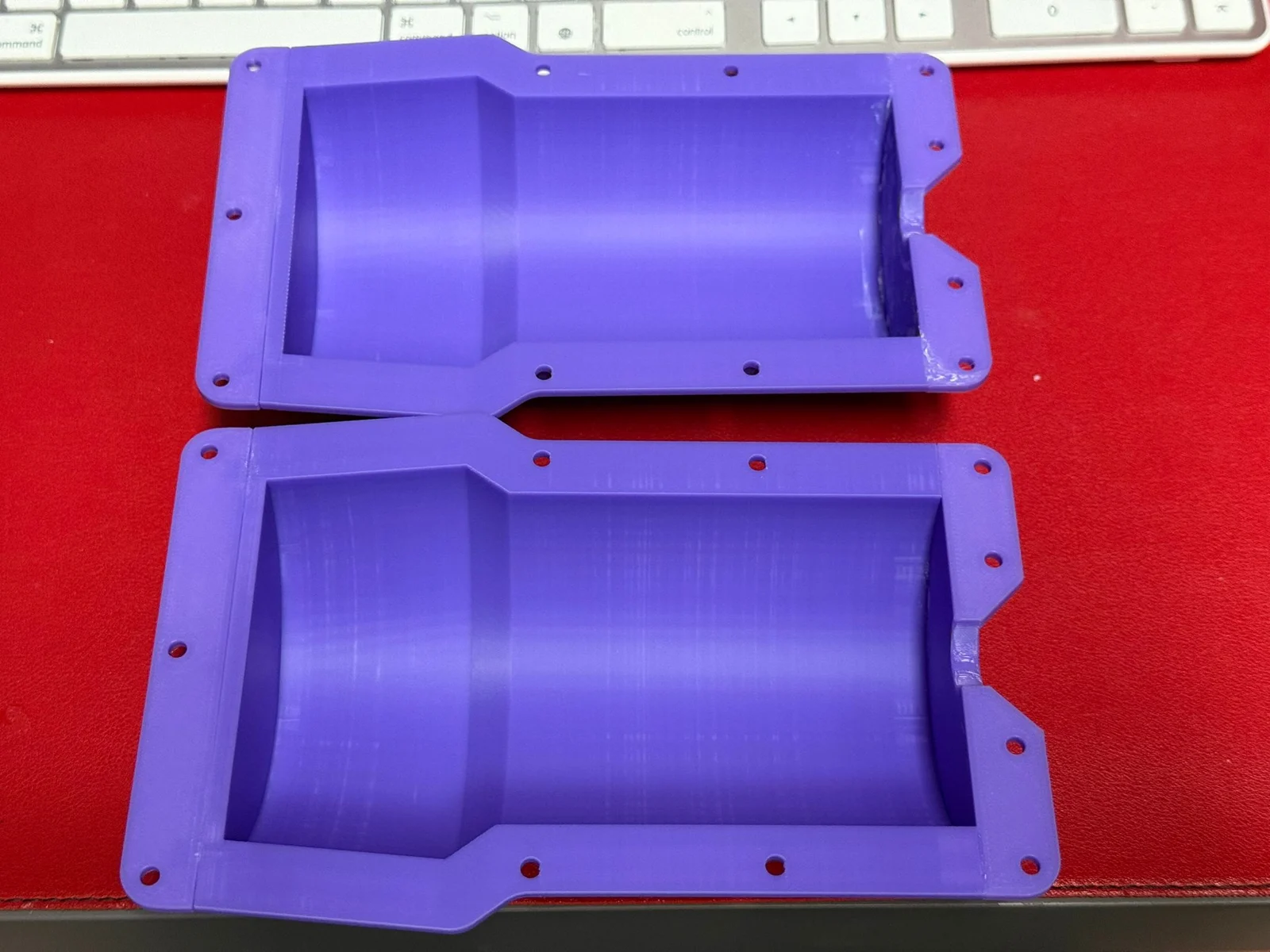
For the foam-pouring mould, the important surface was inside. We adapted the customer’s file so sections could be printed vertically, reinforced the outside and planned pinned, bonded joints. The aim was to improve the internal finish without changing the moulded shape.
We also produced a lightweight-PLA float shell and separate spindle. Once the intended operating depth was discussed, the approach changed to a shell that the customer could fill with pouring foam. Pouring-hole position, wall thickness and weight were all part of the iteration.
The team could then assess the assembled part and decide what to change next.
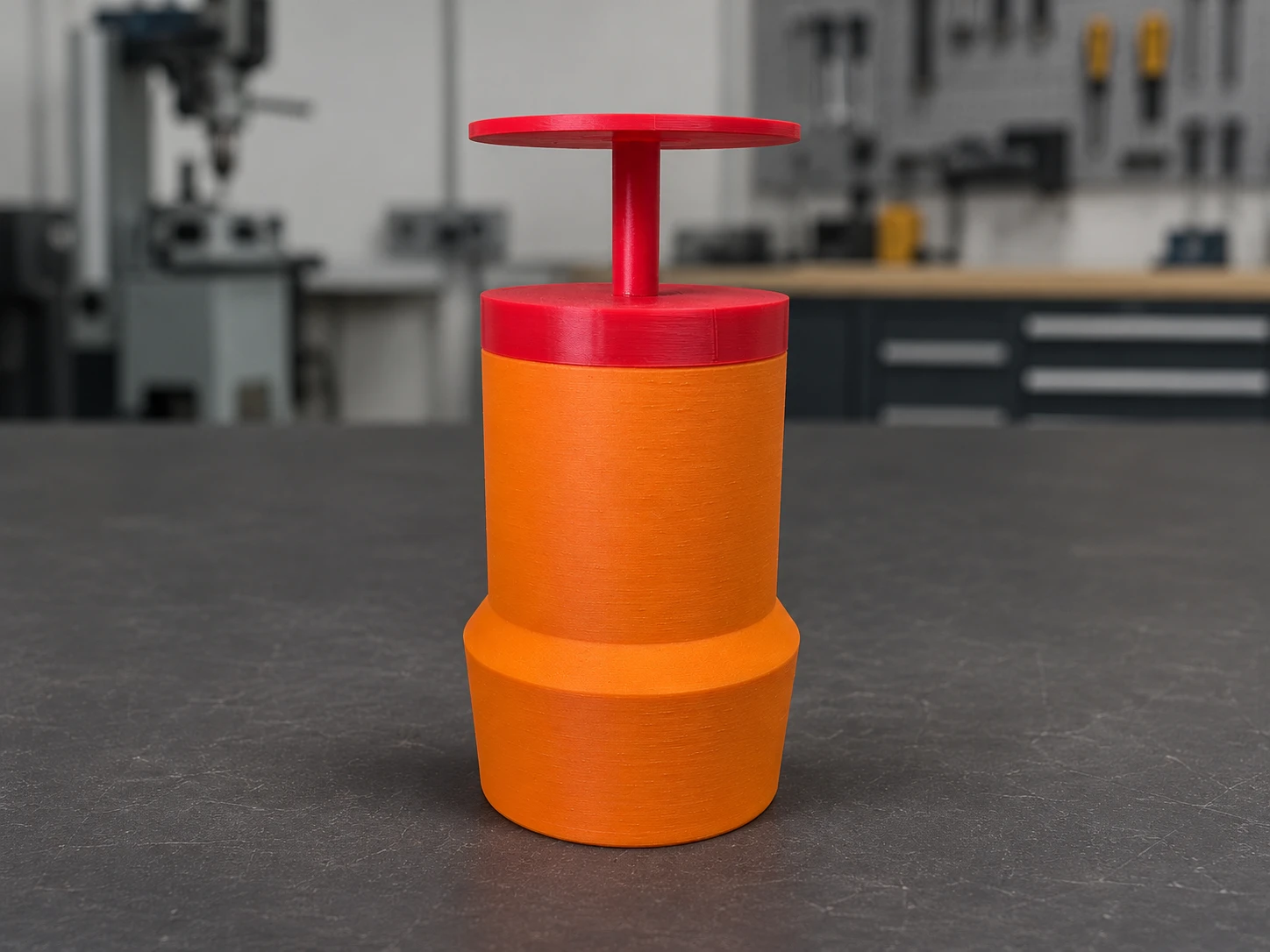
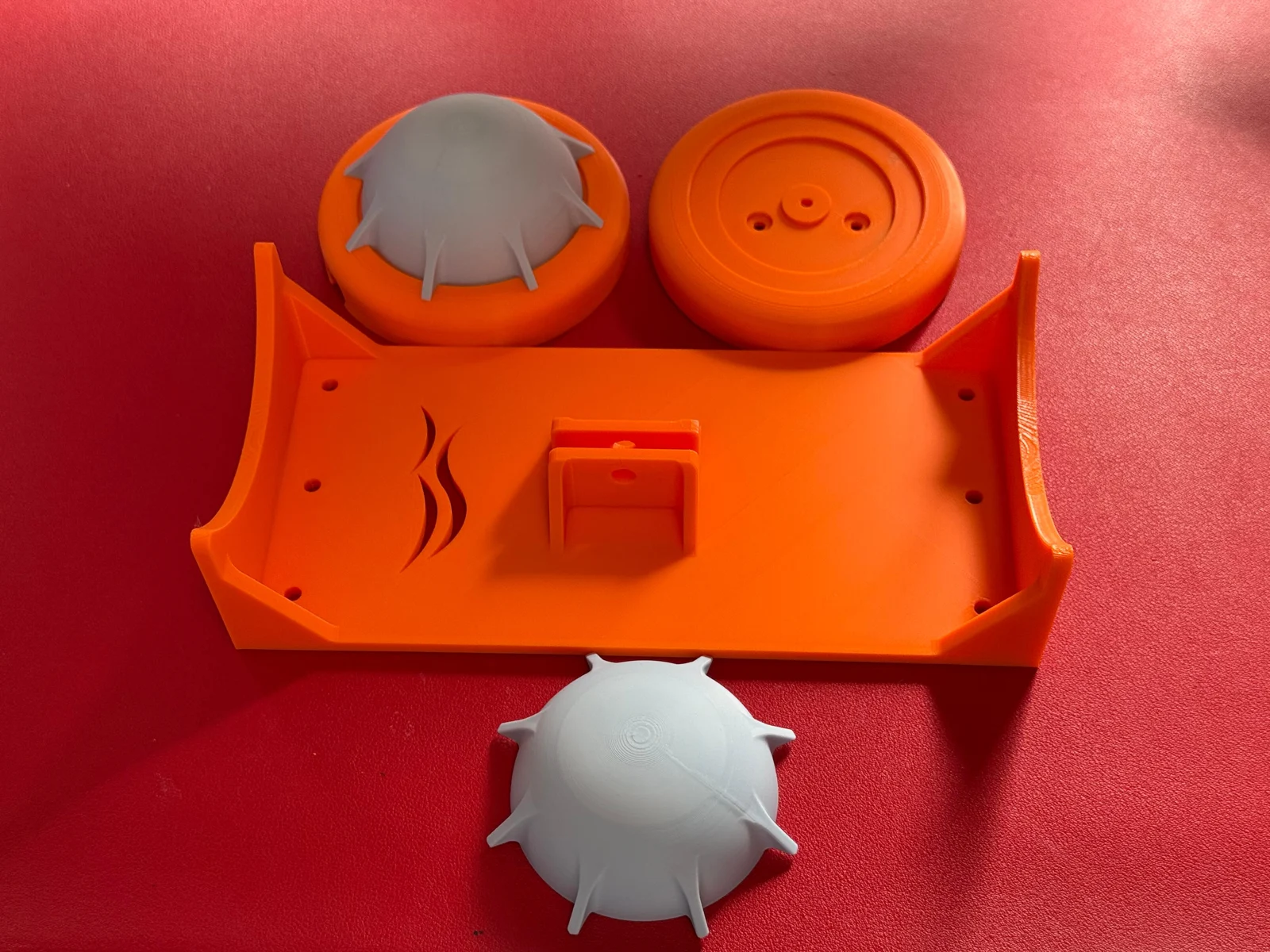
Bait Saviour’s published WaTS development report describes controlled dive-pool trials of its backup buoy system. The team observed deployment, rope tension and buoy behaviour, with further open-water testing described as the next step.
It is useful context for the floats and mechanisms in our workshop photographs: they were parts of a system being developed through physical testing, not just presentation models.
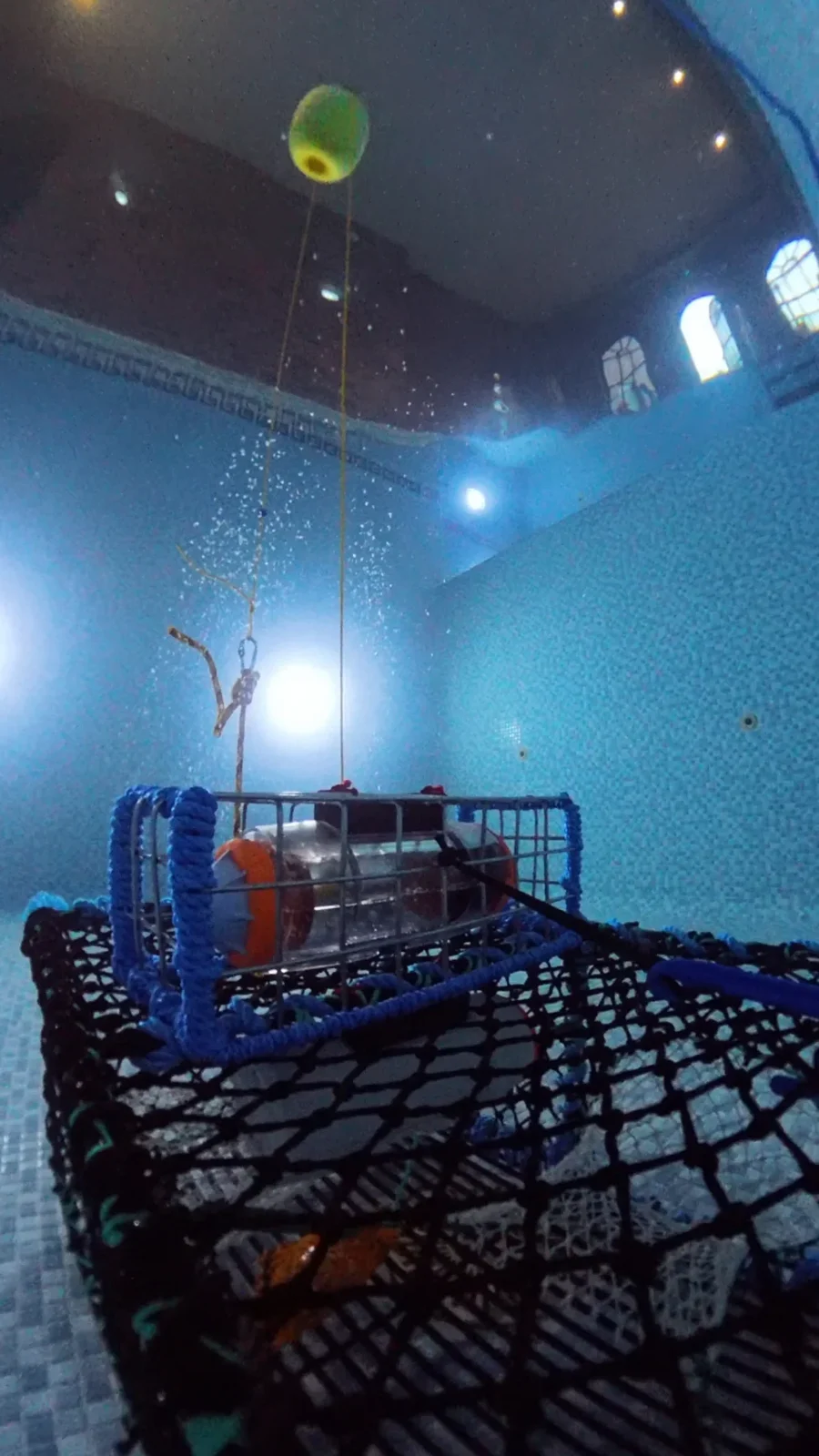
A small pin needed to hold a 3 mm metal rod but still give enough during insertion. After the first PETG versions, we included flexible TPU alternatives and checked them against a rod in the workshop.
The customer confirmed that the white TPU plugs worked and later ordered more, saying the material and fit were what they needed. It was a modest part, but a clear example of a practical material change solving the next assembly problem.
The work continued with brackets, mechanisms, case revisions, charger parts and identification tags. Some parts became small-batch orders; others went back around the design loop.
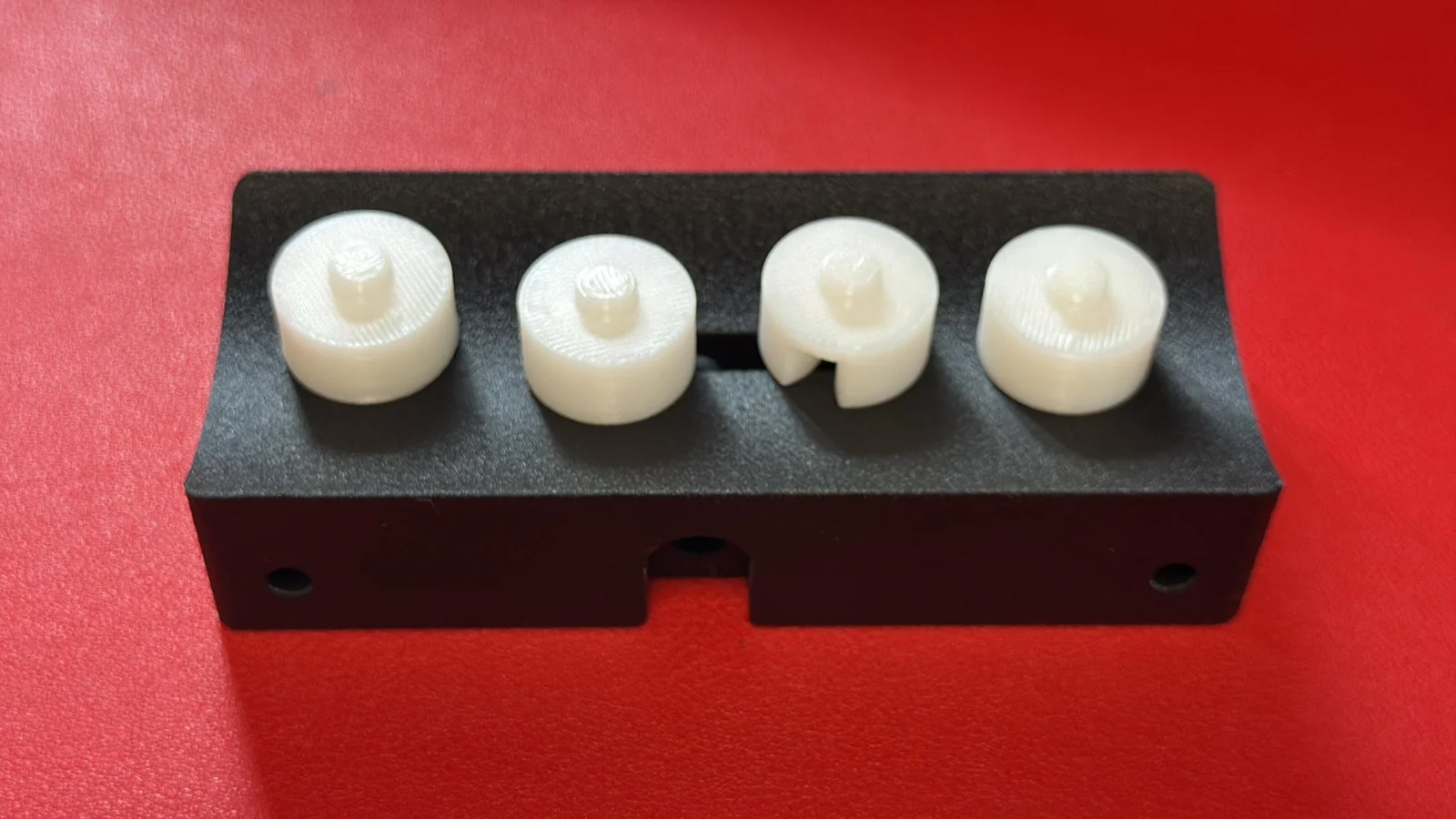
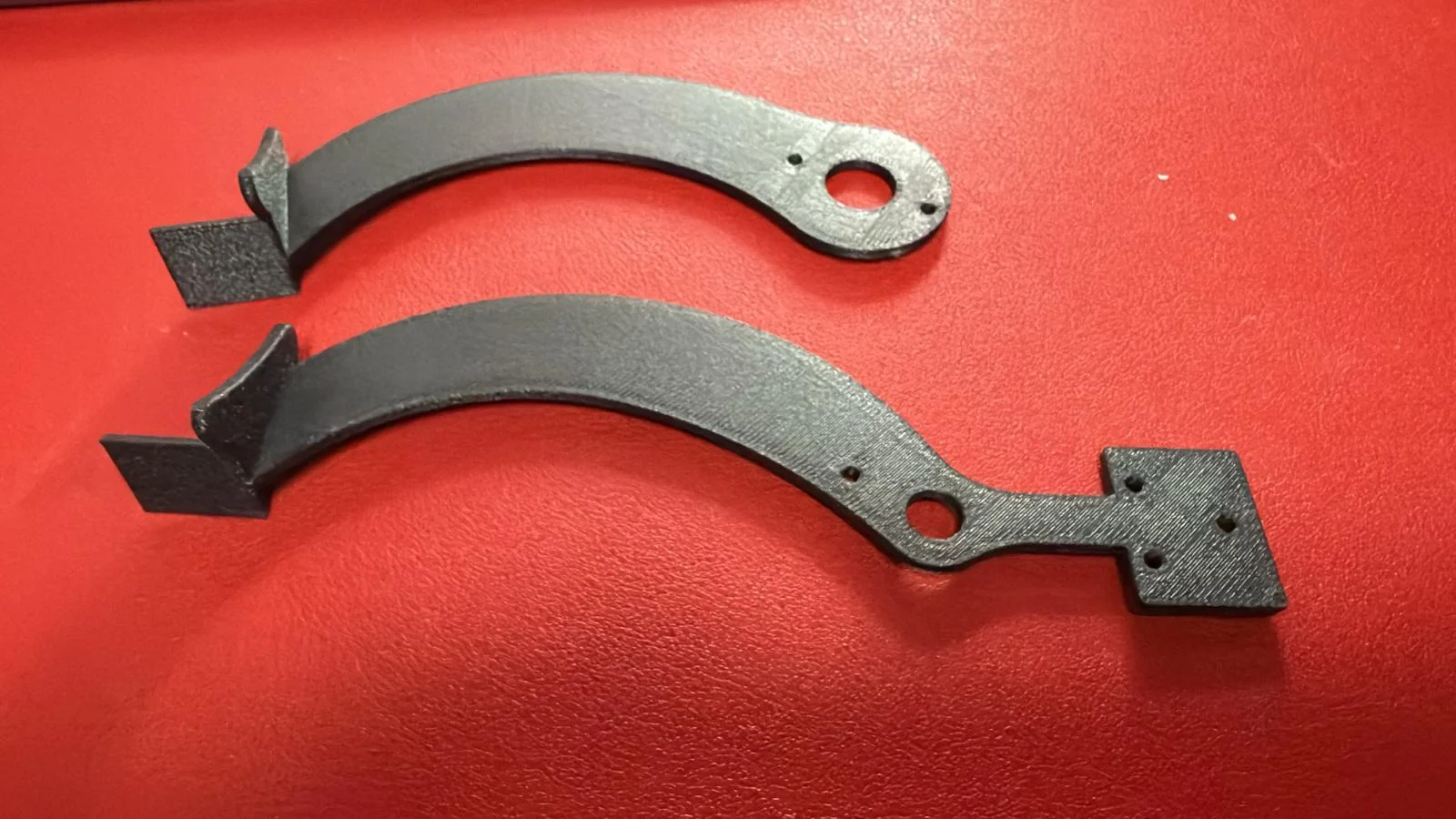
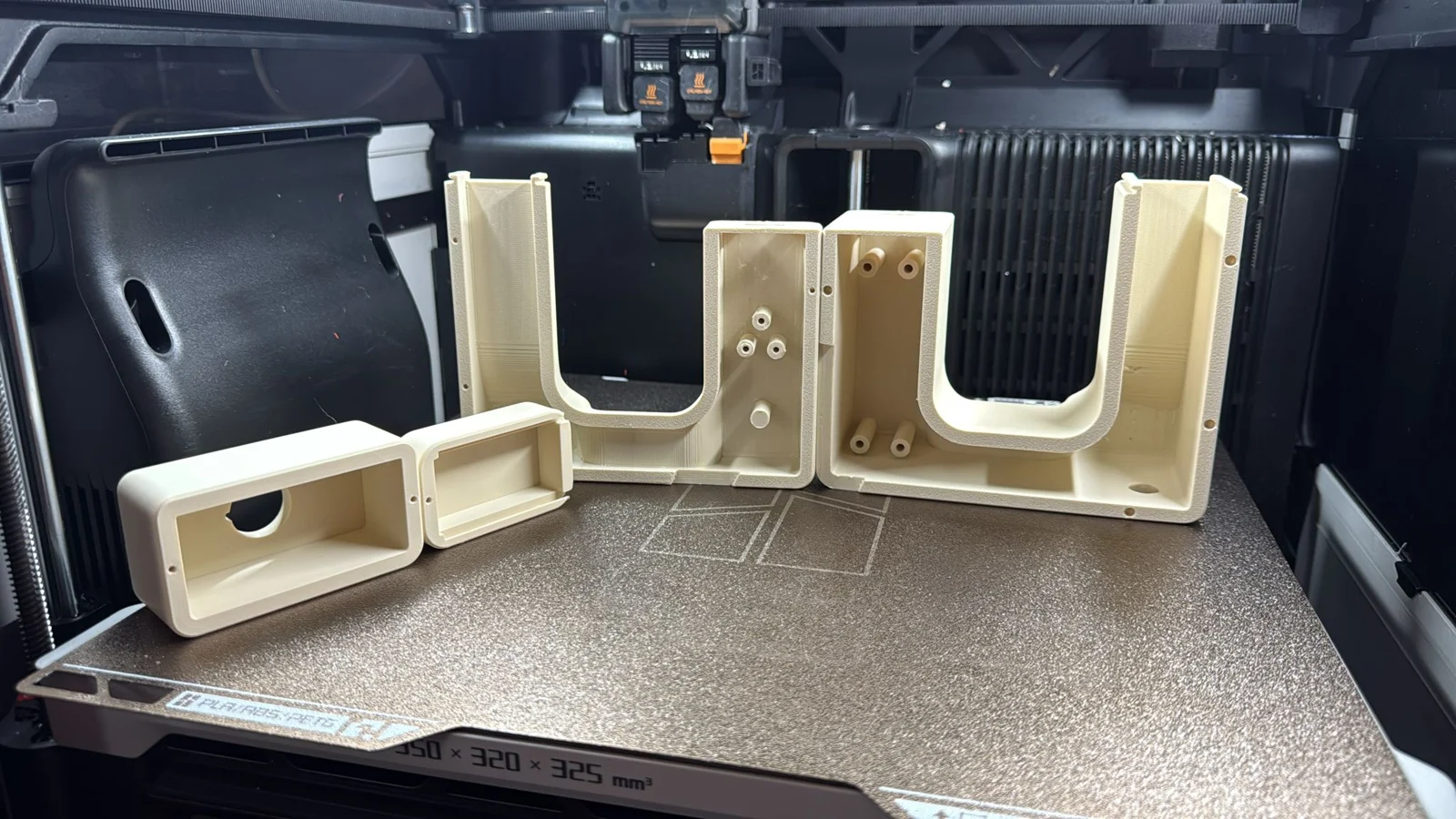
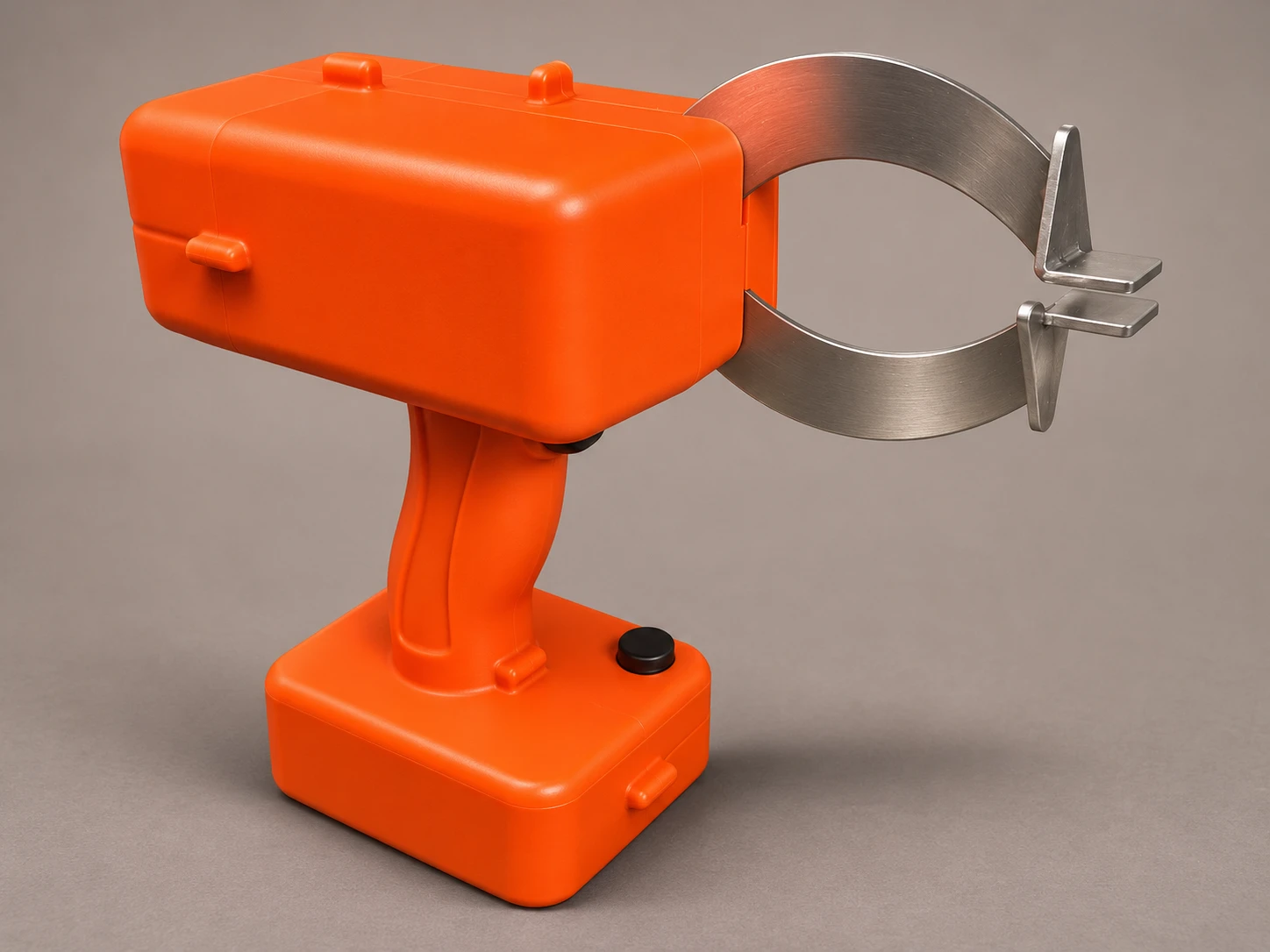
As the project grew, the work included further equipment housings and moving parts. The current e-bander on Bait Saviour’s website shows the wider commercial fishing context: a powered tool for applying lobster claw bands.
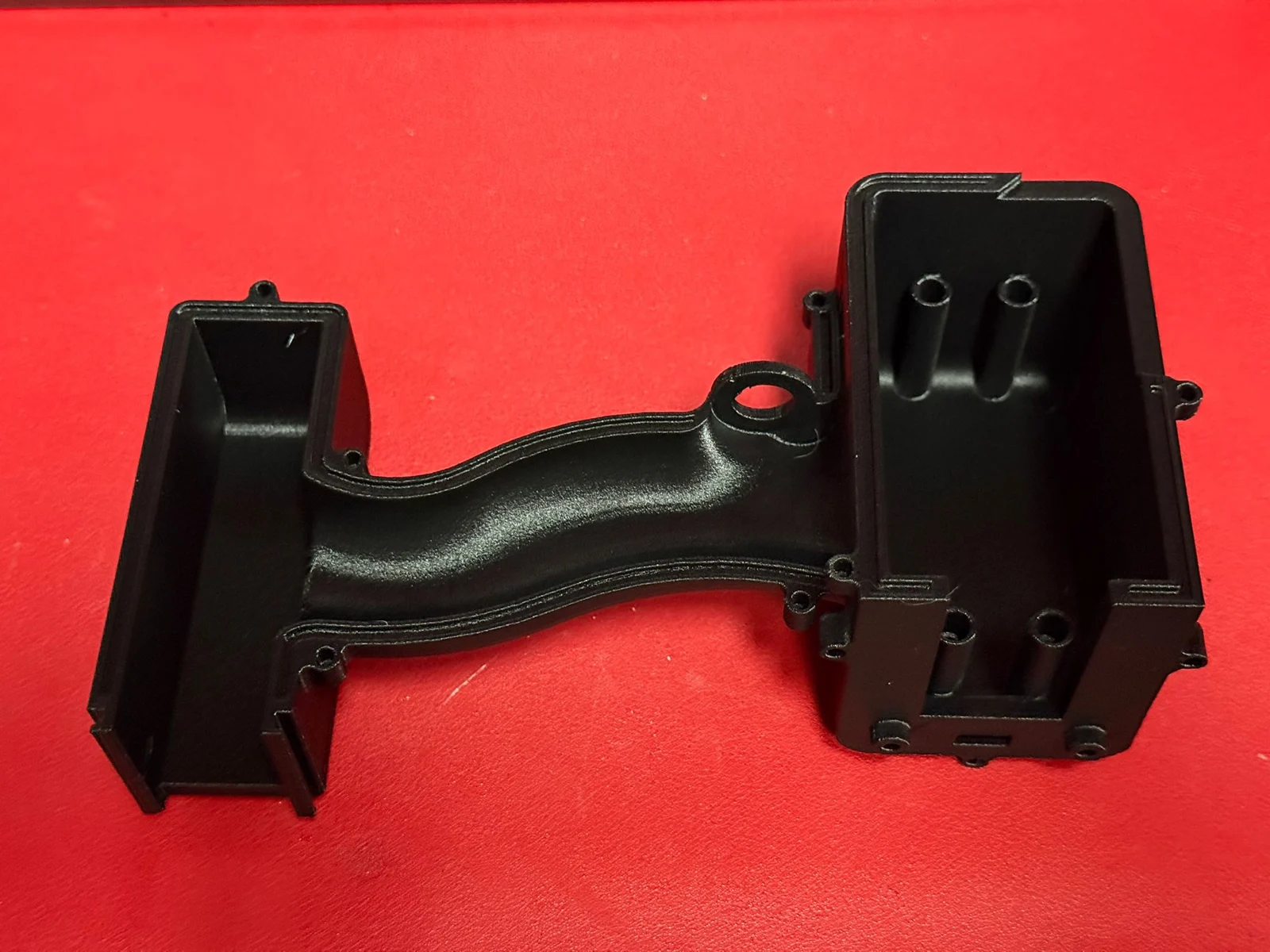
The value was not a single finished print. It was being able to return with another revision, another material question or another part to fit, and get a physical answer.
Bridges, hooks, joints and orientation were considered alongside the shape the customer needed.
A rigid basket, flexible pin and lightweight float did not need the same plastic or the same trade-offs.
One-offs and small batches let the team check revisions before committing to larger quantities or tooling.
A prototype does not need to answer every question. It needs to answer the next one well enough to move the project forward.
Product concept, original CAD and system development: Bait Saviour. Prototype manufacturing, printability adaptations and material support: Phoenix Additive. Workshop photographs are from our project archive. Bait Saviour source images are credited and linked individually.
Bait Saviour carried out system testing and publishes its own current product specifications and development reports.
Bait Container · WaTS testing · e-bander · Explore the wider range
Send a STEP or STL for a quote. If material, fit or print orientation is still an open question, tell us what the part needs to do.