
The problem was visible underneath
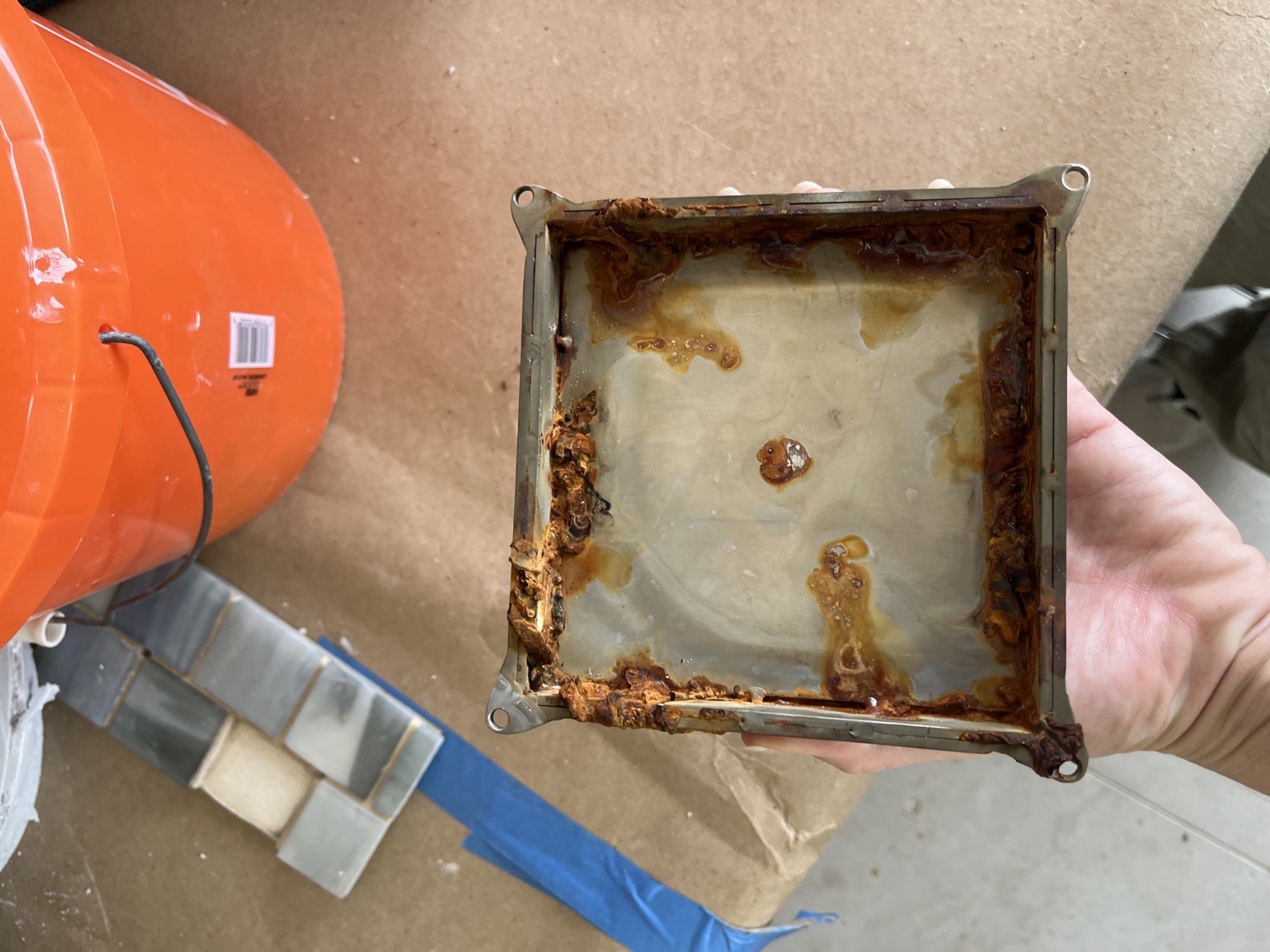
One of the photos our customer in the US Virgin Islands sent us showed a stainless-steel pool return grate with rust spreading around its underside. They needed 22 replacements. Each had to fit an existing tiled opening, cope with a wet, chemically treated environment and take the weight of someone walking over it.
Making 22 parts straight away would have been an expensive way to discover a fit problem. So we started with one.
Making the design printable
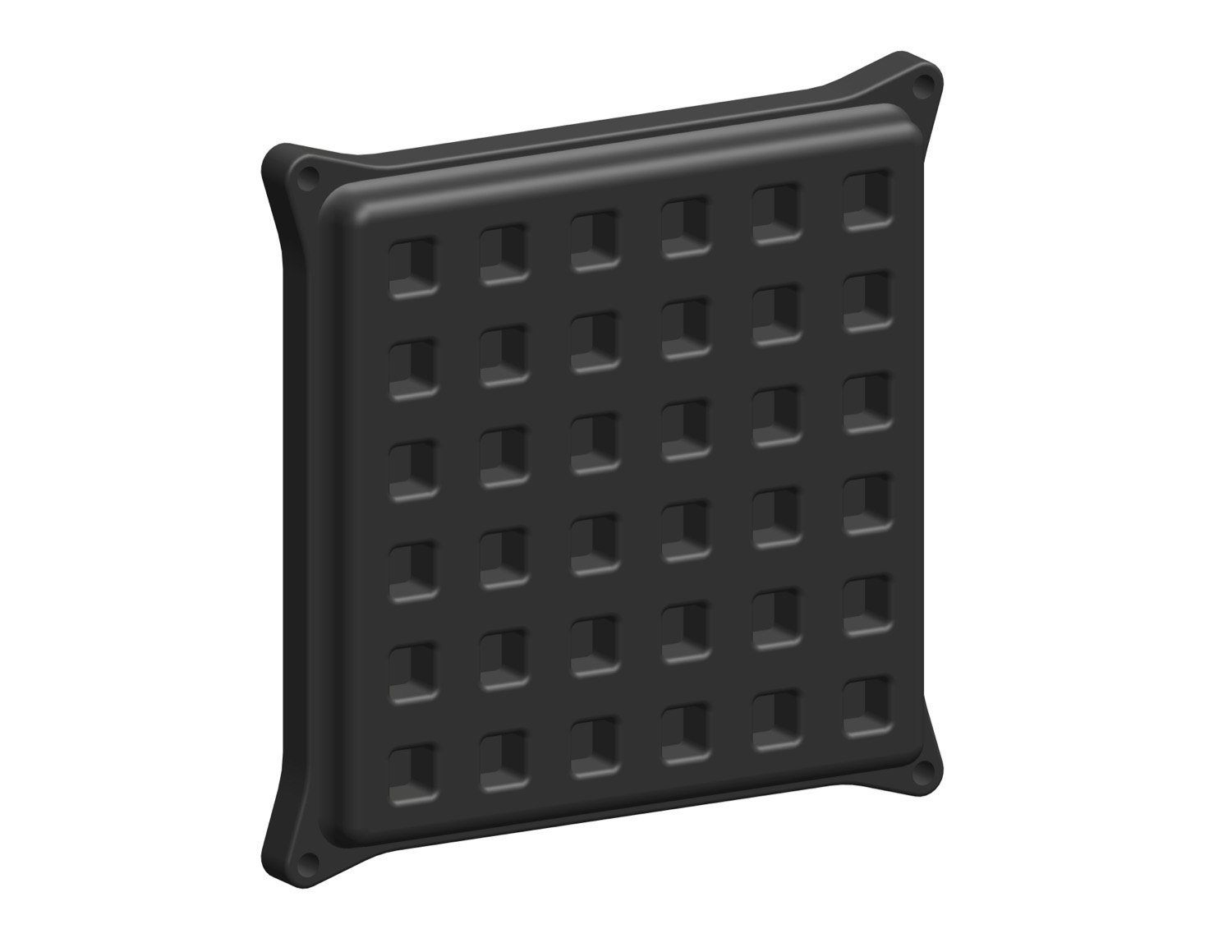
The customer arranged for a 3D modeller to create the replacement. When they sent us the files, we spotted a recessed section underneath that would need extra print supports. We suggested flattening it, as long as that recess was not needed in the pool fitting. Their modeller made the change.
It sounds small, but it meant less support material to remove and fewer marks on the finished part. The revised drawing showed a 140 × 140 mm outer profile with corner mounting points.
One sample before the full run
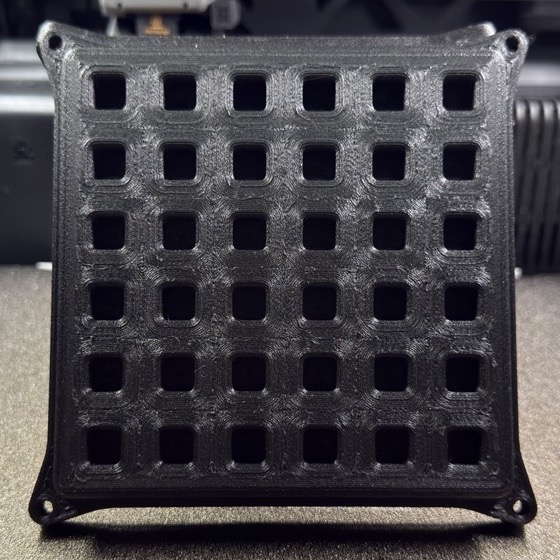
We printed the first grate in PETG-CF and sent it to the customer to try in place. It cost less than making the test in the final PPA-CF, while giving them a more representative carbon-fibre-filled part to check than an ordinary PLA sample. They confirmed it fitted and gave us the go-ahead for production.
We then printed the 22 final grates in black PPA-CF. We chose it for the strength, stiffness and moisture-exposure demands of this job, while leaving the actual fit and loading checks to the customer's real installation.
How did they work out?
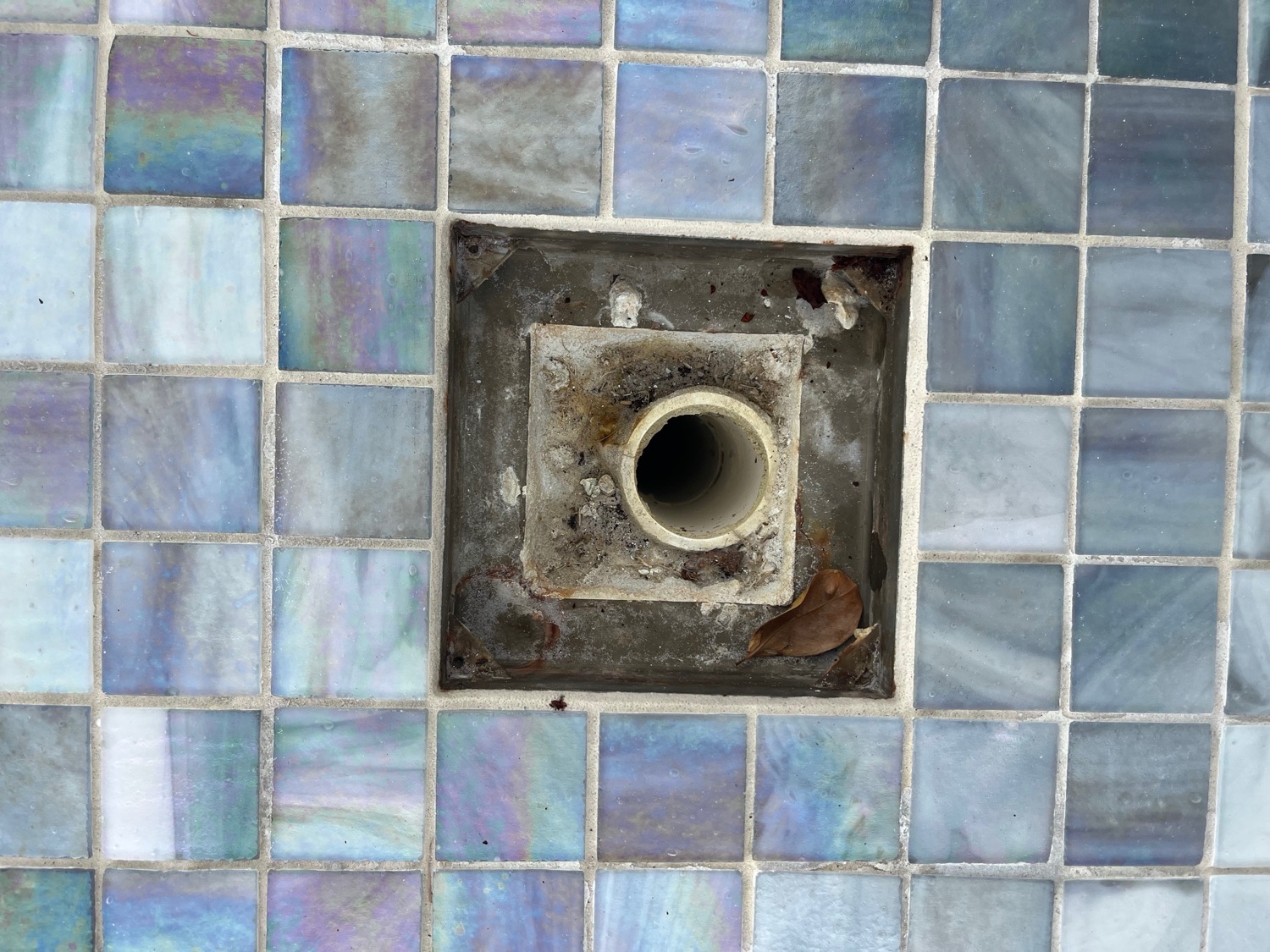
The customer has since confirmed that all 22 fitted properly. They also told us the grates passed their load tests beyond the 250 lb (approximately 113 kg) requirement they gave us at the start.
What made the difference
For us, the best part of this project was the order of work: make the model easier to print, check one physical part in the real opening, then commit to the full batch. That one sample removed a lot of guesswork.