
Ultra-stiff carbon-fibre polyamide
PPA-CF

PPA-CF: Metal-like polymer strength with exceptional stiffness and hot/wet stability.

Carbon-fibre reinforced PPA sits at the top of practical FFF engineering polymers for structural performance. The reference grade combines 168 MPa published tensile strength, almost 10 GPa flexural modulus and minimal wet-state property loss.

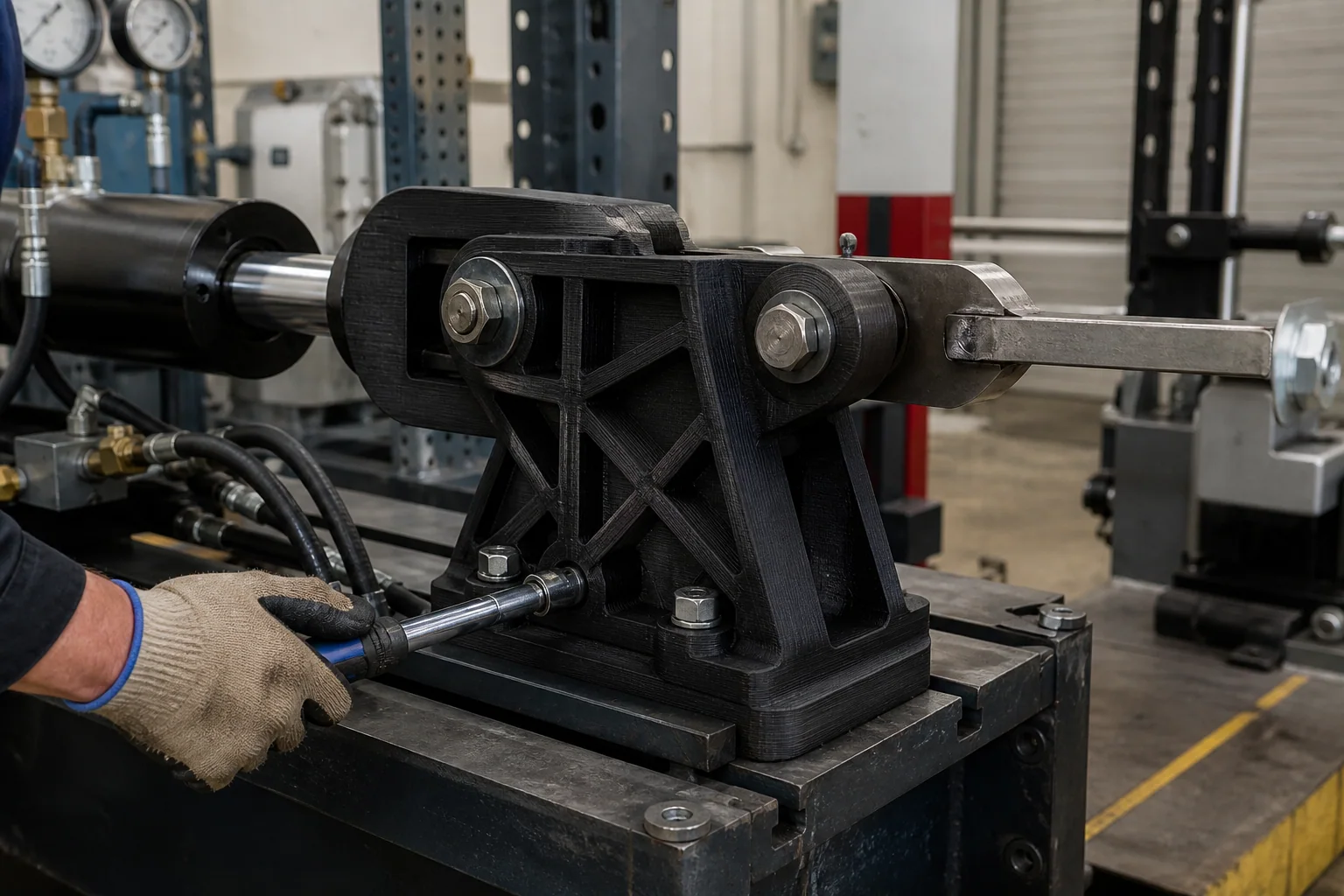
PPA-CF printed structural linkage bracket installed on an industrial actuator test rig
Representative applicationMetal-like structural linkage for high-load validation equipment

The engineer’s read.

Material family names are not specifications. This page anchors the discussion to a named commercial grade and published printed-specimen data, then translates that data into practical selection and design guidance.

What it brings

Carbon-fibre reinforced PPA sits at the top of practical FFF engineering polymers for structural performance. The reference grade combines 168 MPa published tensile strength, almost 10 GPa flexural modulus and minimal wet-state property loss.

Selection verdict

Choose PPA-CF for the most highly loaded polymer fixtures and structural parts before moving to metal or higher-cost ultra-polymers.

Printed properties.

Orientation, conditioning and geometry can move finished-part performance materially. Use these figures to compare candidate materials—not as guaranteed minimums.

PropertyRepresentative valueTest / context
Density1.25 g/cm³Manufacturer TDS
Tensile strength · dry168 ± 4 MPaManufacturer TDS
Elongation at break · dry3.2 ± 0.4%Manufacturer TDS
Flexural modulus · XY dry9.86 ± 0.48 GPaManufacturer TDS
Flexural modulus · XY wet9.62 GPaManufacturer method
Flexural strength · XY dry208 ± 6 MPaManufacturer TDS
HDT · 0.45 MPa227°CISO 75
Saturated moisture uptake1.30% · 25°C / 55% RHManufacturer method

XY values normally represent flat-printed specimens. Z-direction strength can be substantially lower. Final production settings should be qualified on representative geometry.

Selection logic.

A useful material choice starts with load case, temperature, environment, duty cycle and failure consequence—not the strongest number on a datasheet.

Advantages

  • Exceptional tensile and flexural strength
  • Very high stiffness with only 2.4% published wet-state modulus decline
  • High thermal headroom
  • Excellent dimensional stability for precision tooling

Watch-outs

  • Premium material best reserved for genuinely demanding load cases
  • Low elongation makes notch design critical
  • Metal-like strength does not make every printed part a direct metal replacement

Strong applications

Heavily loaded fixturesStructural machine componentsAutomotive under-bonnet partsMetal-replacement studiesRobotics structuresHigh-temperature tooling