Glass-fibre reinforced elastomer
TPU-GF

TPU-GF: When “indestructible” is a mechanical need.

TPU-GF is a hard 64D TPU base reinforced with 15% short-cut glass fibre. The fibre adds stiffness, hardness and dimensional stability, while the TPU matrix keeps 80% elongation at break and a Charpy specimen that did not break. It sits between flexible TPU and the rigid engineering composites.
Black TPU-GF printed mechanical part fitted to a machine
ApplicationStiff, impact-tolerant mechanical parts that flex rather than crack

The engineer’s read.

What it brings

TPU-GF is a hard 64D TPU base reinforced with 15% short-cut glass fibre. The fibre adds stiffness, hardness and dimensional stability, while the TPU matrix keeps 80% elongation at break and a Charpy specimen that did not break. It sits between flexible TPU and the rigid engineering composites.
Selection verdict

Choose TPU-GF when a part needs more stiffness and shape holding than TPU but must survive impacts and flexing that would crack a rigid composite. Choose standard TPU for softness and grip, or a rigid composite such as PA6-GF when load-bearing stiffness matters most.

Key features.

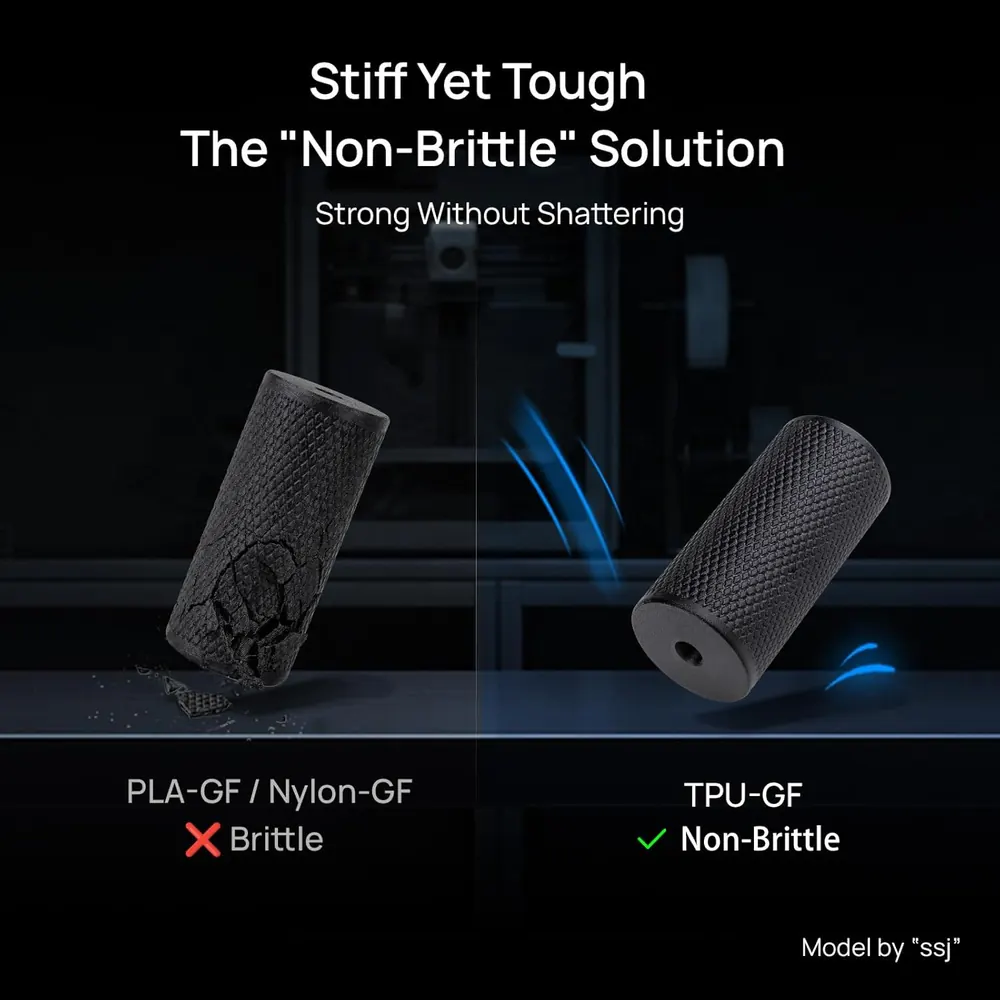
Comparison of printed grip handles: PLA-GF or Nylon-GF shown as brittle, TPU-GF shown as non-brittle

Stiff yet tough

The 67D TPU-GF base absorbs energy: rigid enough to carry a load, yet tough enough to survive a drop. Where PLA-GF and Nylon-GF parts shatter, TPU-GF does not.

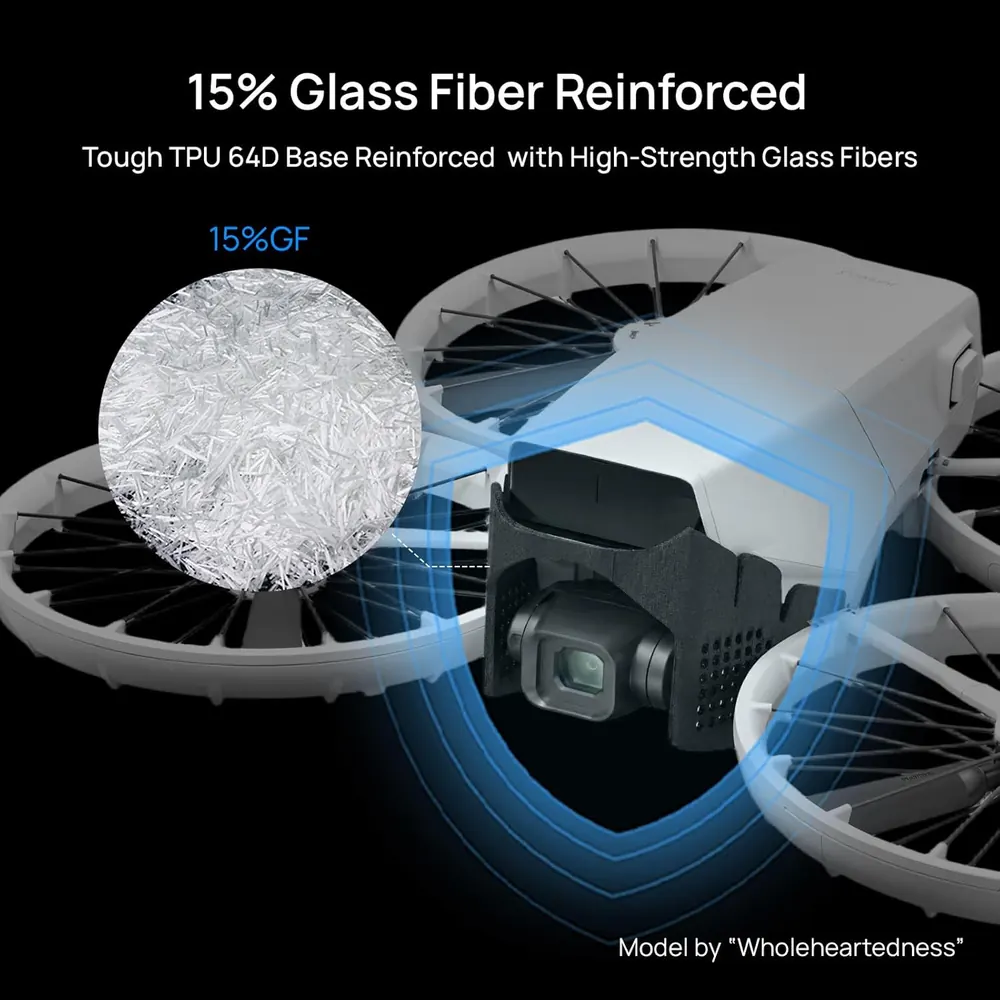
Image of a printed drone camera mount with a close-up of the 15% glass fibre reinforcement

15% glass fibre reinforced

The glass fibres form a structural skeleton inside the TPU, adding the dimensional stability and load-bearing strength needed for industrial tools while greatly reducing warping and shrinkage.

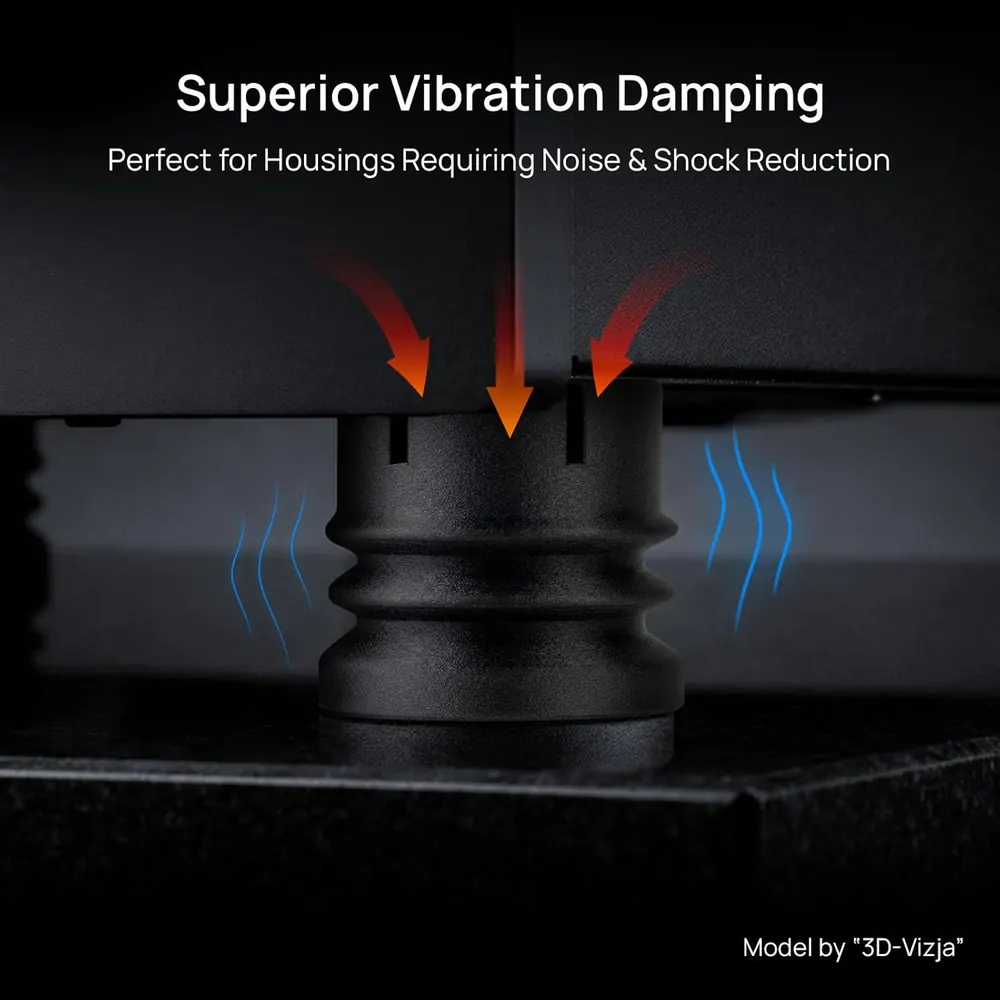
Image of a printed TPU-GF bellows foot damping vibration under a machine

Vibration damping

The TPU-GF matrix acts as a natural shock absorber, soaking up high-frequency vibration that rigid plastics pass straight through. Well suited to housings needing noise and shock reduction, and to smoother FPV footage.

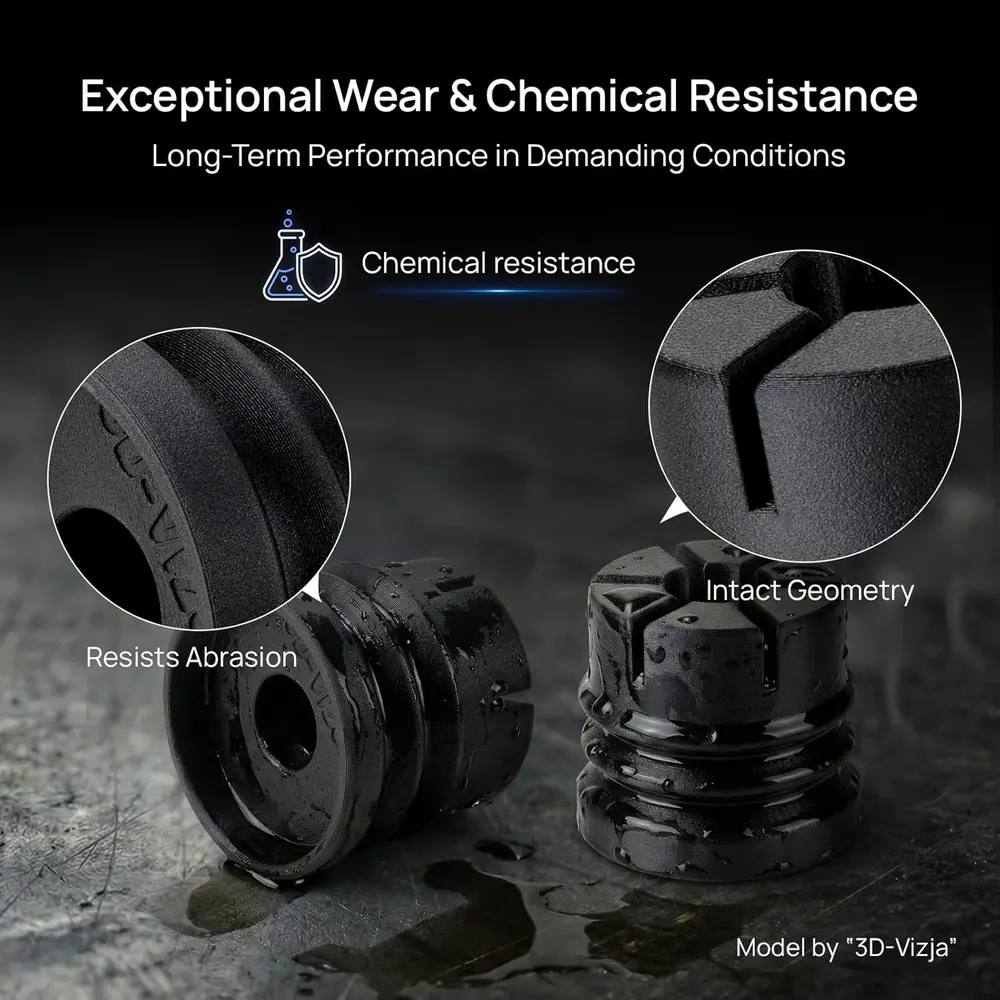
Image of printed TPU-GF damper gaskets showing abrasion resistance and intact geometry

Wear and chemical resistance

A reinforced surface resists heavy abrasion and friction, plus resistance to automotive oils, greases and common solvents, for high-wear parts, workshop tools and under-bonnet prototypes.

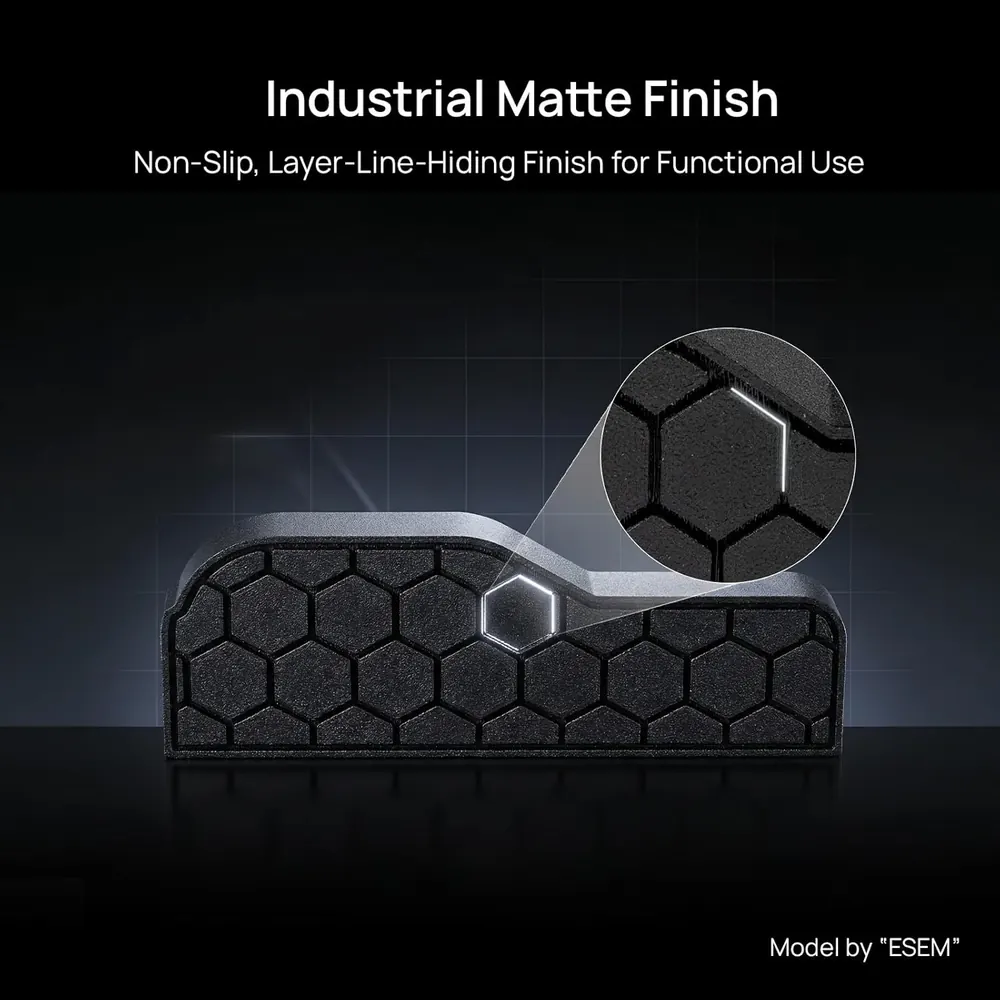
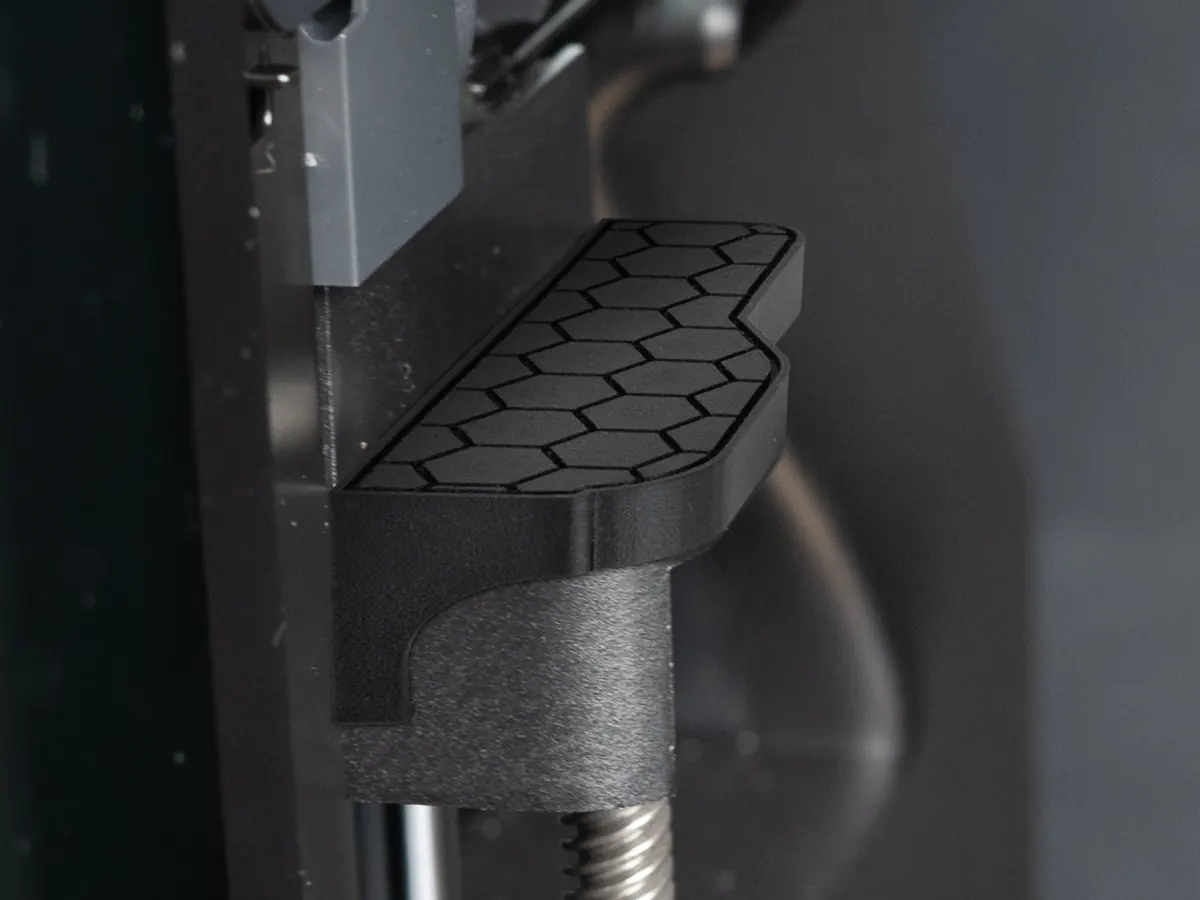
Image of a printed hexagon-pattern wrist rest with an industrial matte finish

Matte finish that hides layer lines

The high glass content diffuses light, giving a matte black, non-slip finish with a moulded look straight off the bed.

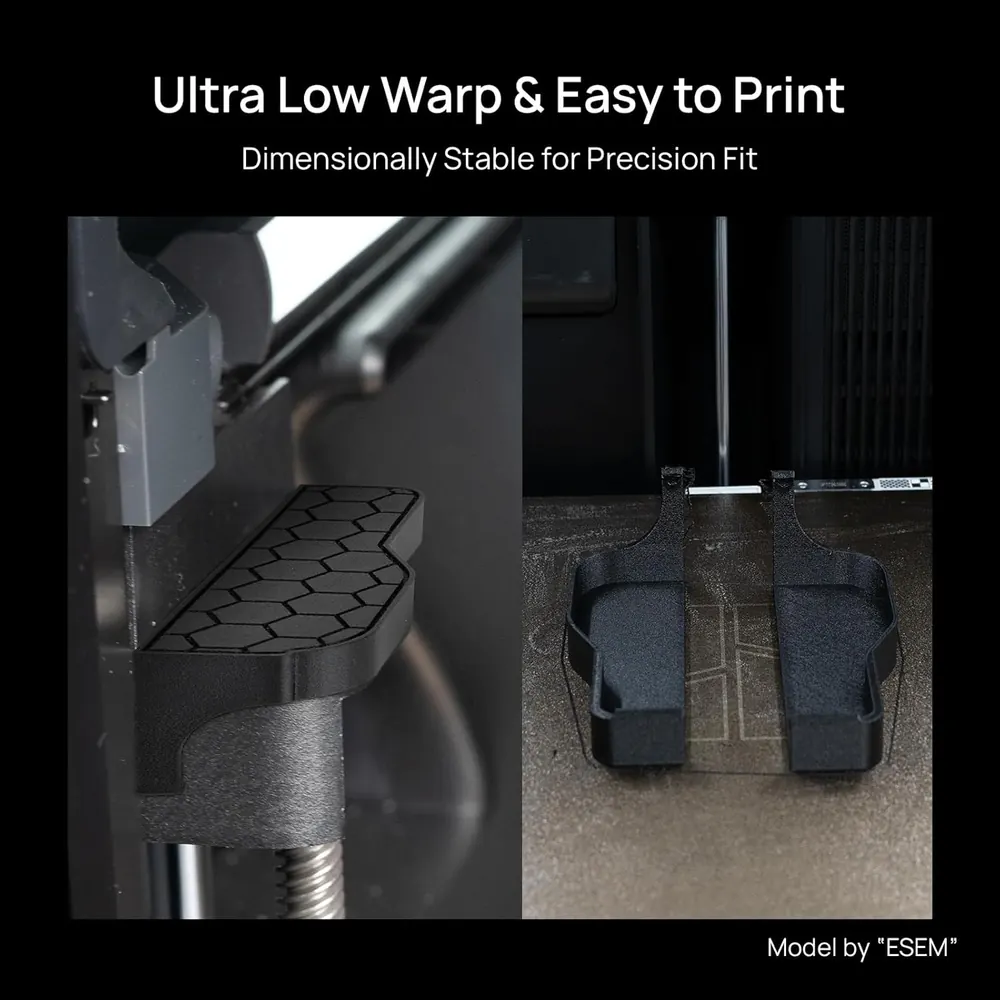
Image of TPU-GF hexagon pad parts printed flat on the build plate with no corner lift

Ultra low warp

Internal glass fibres stabilise the print, preventing corner lifting on large parts and helping tight-tolerance jigs and interlocking mechanisms fit.

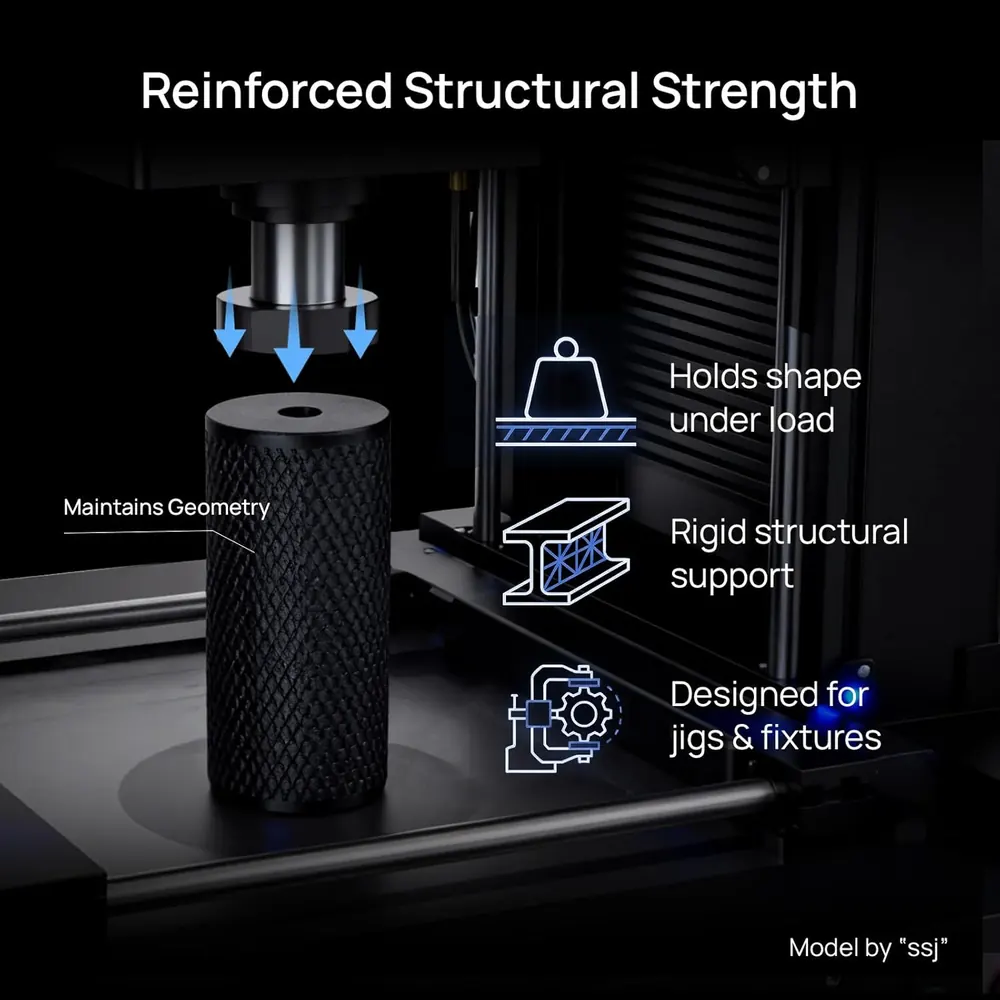
Image of a printed knurled TPU-GF cylinder holding its shape in a compression press

Reinforced structural strength

TPU-GF holds its shape under load and gives structural support, making it a good fit for jigs and fixtures.

Matte black printed TPU-GF arm being screwed onto a carbon fibre FPV drone frame on a workshop bench

Built to survive crashes

TPU-GF drone arms are stiff enough to hold the motors steady in flight, yet absorb a crash that would snap a rigid composite arm. In standard impact tests, TPU-GF samples bent rather than broke.

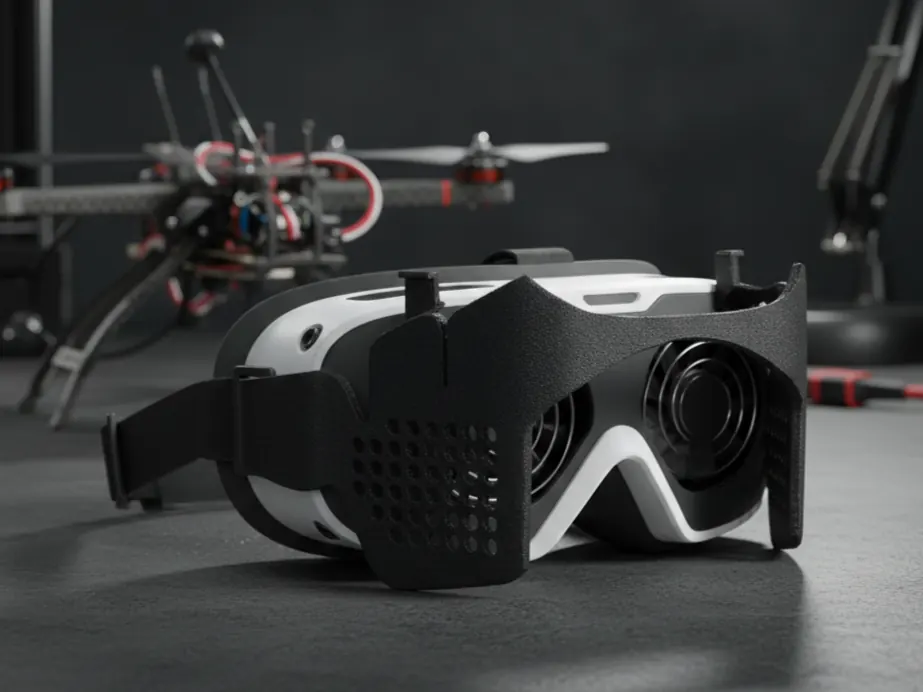
Photo of a VR headset with a black printed TPU-GF face frame
Wearable devices
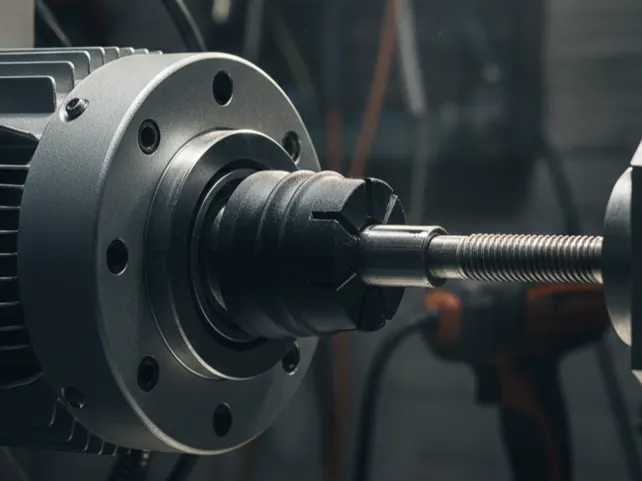
Photo of a black printed TPU-GF part on an industrial motor shaft
Industrial equipment
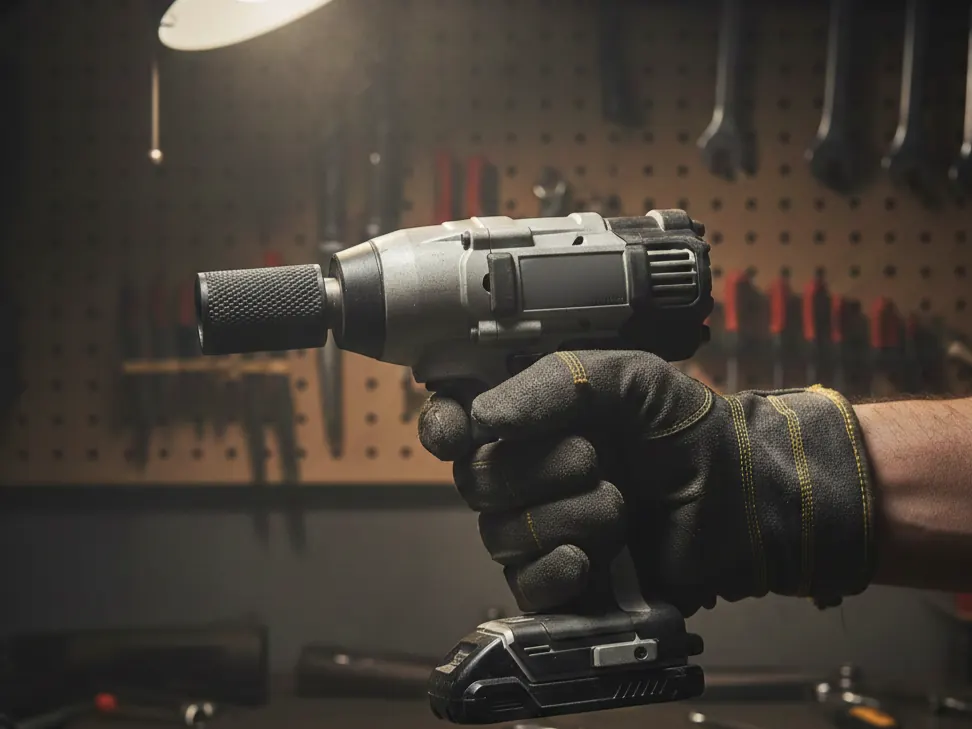
Photo of a gloved hand holding a power tool with a black printed TPU-GF grip
Buffer grips

Some images credit the original model designers in the image itself.

Printed properties.

PropertyRepresentative valueTest / context
Base materialTPU 64D formula + 15% short-cut glass fibreManufacturer TDS
Density1.32 g/cm³ISO 1183
Tensile stress at break · XY32 MPaASTM D638
Young’s modulus · XY445 MPaASTM D638
Elongation at break · XY80%ASTM D638
Tensile stress at 100% / 200% / 300%8.3 / 8.8 / 9.5 MPaASTM D412
Charpy impact strengthDid not breakISO 179
Bending strength15 MPaISO 178
Bending modulus450 MPaISO 178
Vicat softening temperature157.3°CISO 306
Shore hardness67DISO 7619
Melting point230°CASTM D3418
Water absorption1.69%ISO 62 method 1

Selection logic.

Advantages

  • Considerably stiffer and harder than standard TPU while keeping 80% elongation at break
  • Charpy impact specimens did not break (ISO 179)
  • Glass fibre gives very low warping and better dimensional stability than unfilled TPU
  • Matte finish that hides layer lines well

Watch-outs

  • Far less stiff than rigid composites: 450 MPa bending modulus against several GPa for grades such as PA6-GF
  • Must be dried before printing (50 to 60°C for 6+ hours); wet material oozes and gives brittle parts
  • Glass fibre is abrasive and needs a hardened nozzle of 0.4 mm or larger; sanding or machining releases glass dust, so wear a dust mask and eye protection

Strong applications

FPV drone framesIndustrial jigsHeavy-duty parts needing stiffness and elasticityImpact-resistant guards and coversLow-warp flexible structuresProtective machine bumpers